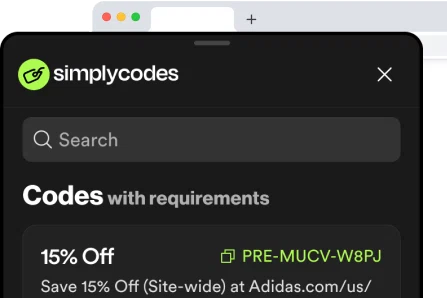
SimplyCodes deal analysis and a review of official Revolut for Business account documentation reveal several concrete strategies businesses can use to reduce costs and maximize the value of their financial tools.
Optimize Your Plan Tier to Match Actual Feature Usage
Revolut for Business structures its pricing across four distinct account tiers — Basic, Grow, Scale, and Enterprise — each with different limits on free transfers, team member access, and advanced financial features. Choosing the wrong tier is one of the most common sources of unnecessary spending for business account holders.
According to SimplyCodes analysis of the Revolut for Business plan structure, businesses that consistently pay overage fees on transfers or team seats are often better served by upgrading to the next tier, where those features are bundled into the flat monthly cost. The inverse is equally true: businesses that signed up for a higher tier during a period of growth but have since scaled back may be paying for features they no longer use.
The recommended action is to audit your Revolut for Business account usage on a quarterly basis. Compare your actual monthly transfer volume, number of active team members, and feature utilization against the thresholds of your current plan. If your usage consistently falls below your plan's included limits, downgrading to a lower tier — such as from Scale to Grow, or from Grow to Basic — can produce immediate, recurring savings with no change to your day-to-day operations.
Strategically Use Revolut for Business Cards to Maximize Cashback
Revolut for Business offers a Cashback Bonus that is credited to eligible accounts on a monthly basis. According to the official Revolut for Business program terms, the cashback applies to qualifying card purchases, making it a passive savings mechanism for businesses that route regular operating expenses through their Revolut cards.
SimplyCodes internal shopping research highlights that cashback programs tied to business accounts are frequently underutilized because account holders are unaware of which purchase categories qualify or whether a monthly cap applies. Failing to understand these parameters means leaving credited funds on the table.
The recommended action is to review the current terms of the Revolut for Business Cashback Bonus directly on the official Revolut for Business website, paying specific attention to eligible purchase categories and any maximum monthly cashback thresholds. Once confirmed, prioritize routing eligible business expenses — such as software subscriptions, office supplies, or recurring vendor payments — through your Revolut for Business card to ensure the cashback accrues consistently each month.
Check SimplyCodes for Single-Use Promotional Codes
SimplyCodes data reveals that Revolut for Business currently has at least one single-use promotional code available in its database. Single-use codes are distinct from standard public discount codes: they are typically sourced from targeted email campaigns, direct mail promotions, or partner referral programs, and each code can only be redeemed once before it expires.
Because these codes are not broadly advertised, they are frequently missed by businesses that only check official Revolut for Business marketing channels. SimplyCodes's verification system tracks user-submitted codes, including single-use codes shared by community members who received them through private promotional channels.
The recommended action is to check the Revolut for Business page on SimplyCodes before signing up for a new account or upgrading an existing plan. A valid single-use code applied at the right moment — such as during account registration or a plan upgrade — can provide a one-time discount or account credit that would otherwise go unclaimed.
Review Competitor Offers Before Committing to or Renewing a Plan
SimplyCodes data identifies 228 active promotional codes across competitors to Revolut for Business, spanning other online business banking platforms and financial service providers. This volume of competitor promotions signals an actively competitive market where alternative providers are frequently offering incentives — including fee waivers, account credits, and introductory rate discounts — to attract new business customers.
According to SimplyCodes deal analysis, a high number of competitor codes in a given category typically reflects aggressive acquisition-phase pricing from rival platforms. For businesses currently evaluating their banking stack or approaching a plan renewal with Revolut for Business, this competitive landscape creates meaningful negotiating context.
The recommended action is to browse the SimplyCodes business banking category to review current competitor offers before renewing or upgrading a Revolut for Business plan. Even if Revolut for Business remains the preferred platform, awareness of competitor promotions provides a factual basis for evaluating whether the current plan represents the best available value — and in some cases, competing offers may surface features or pricing structures that better fit a business's current needs.