Not every coupon code is up for grabs. Some of the best discounts online are locked behind a simple requirement: you have to be a new customer.
These first-order/new-user promo codes — sometimes called welcome offers or first-order discounts — are how brands like HelloFresh, Whoop, and Poshmark compete for new shoppers. And they tend to be worth more than the average code. When we looked at millions of coupon codes across more than 500,000+ stores, we found that new customer codes offer a median discount of 20% off, compared to 15% for standard promo codes.
The problem is finding them. New customer codes make up a tiny fraction of the coupon landscape — less than 1% of all working promo codes carry a new-customer restriction. They're scattered across specific industries, concentrated in certain brands, and many of the ones floating around online don't actually work.
This guide breaks down where new customer promo codes are most common, which stores consistently offer them, and whether they're actually worth the effort.
What the data shows:
- New customer codes make up less than 1% of all working promo codes — but they offer a median discount of 20% off, compared to 15% for regular codes.
- Food delivery and meal kit services are the most reliable source. The food & restaurants category has nearly 3x the concentration of new customer codes compared to the average.
- Brands like Mercari, Whoop, and Poshmark consistently reserve a significant share of their codes for first-time buyers.
- Travel and electronics almost never offer new customer codes.
How to find first order coupon codes
First order discount codes don't usually show up in the same places as regular promo codes. They're targeted, intentional, and often delivered through specific channels. Here's where to look.
Check the retailer's welcome email
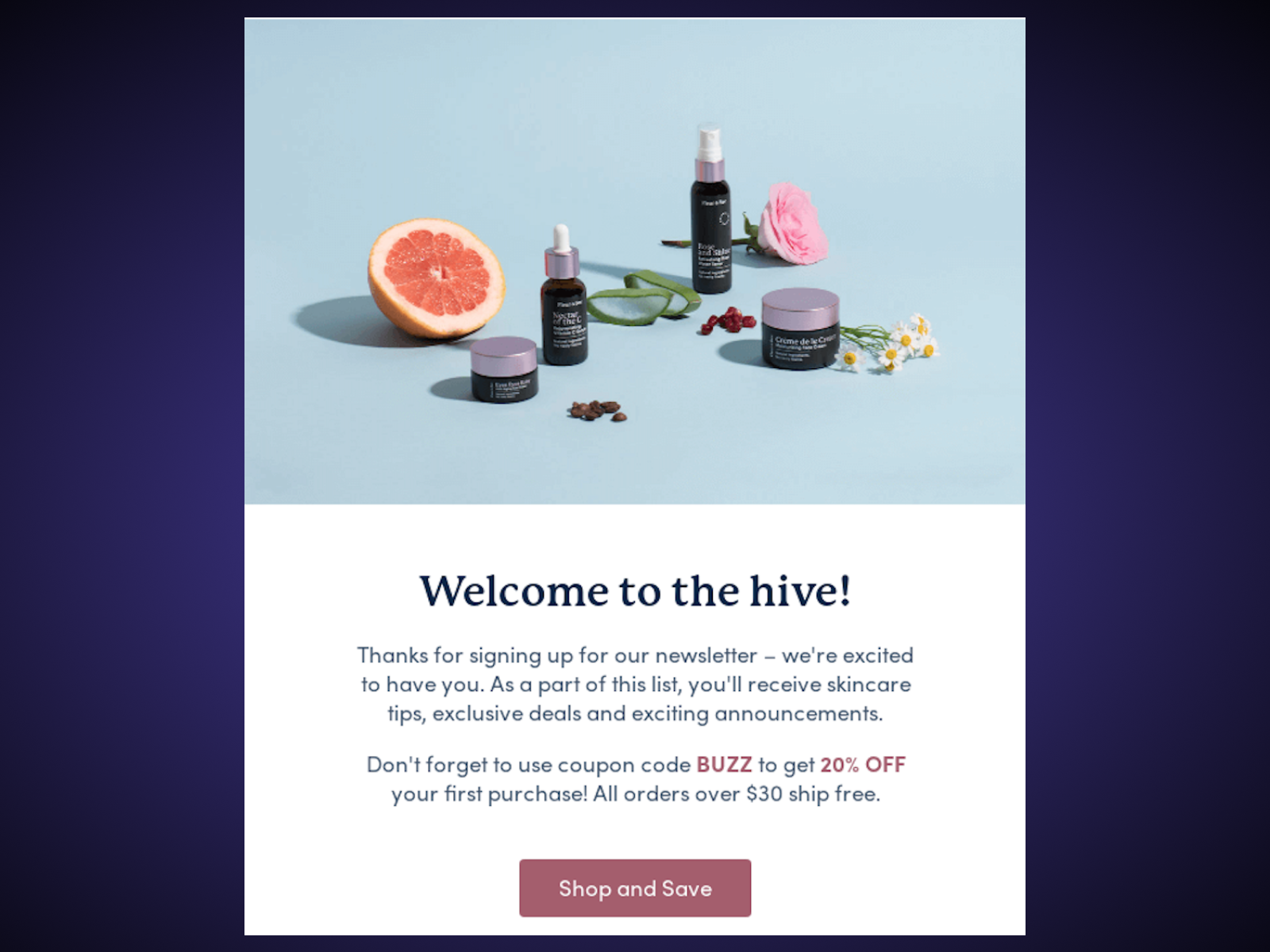
The most reliable source for a first-time discount is the brand itself. Most new customer codes are delivered through email signup pop-ups or welcome sequences — the "Subscribe and get 15% off your first order" banners that appear when you first visit a site.
If you're planning a purchase from a new store, sign up for their email list a few days in advance. The welcome email almost always arrives within minutes, and it frequently contains a code that isn't publicly listed anywhere else.
Look for "new customer" language on coupon pages
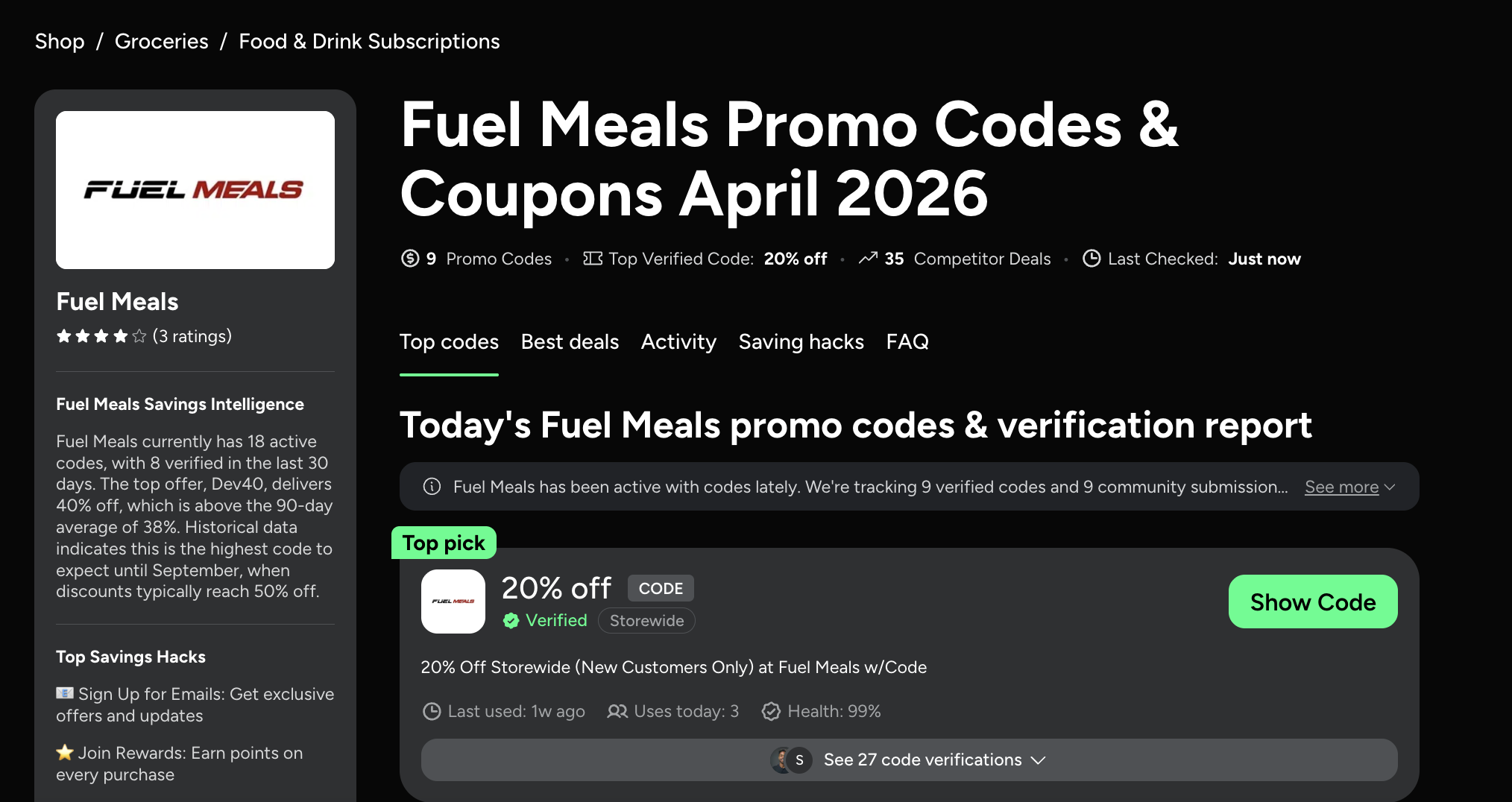
When browsing coupon sites, keep an eye out for specific language: "first order," "new customer," "welcome offer," or "first-time buyer." These phrases signal that the code is restricted to people who haven't purchased from the store before.
On SimplyCodes, new customer restrictions are labeled directly on the code so you don't have to guess. This matters because applying a new-customer code to a returning account usually results in a silent failure at checkout — the discount just doesn't apply, with no explanation.
Start with meal delivery and subscription services
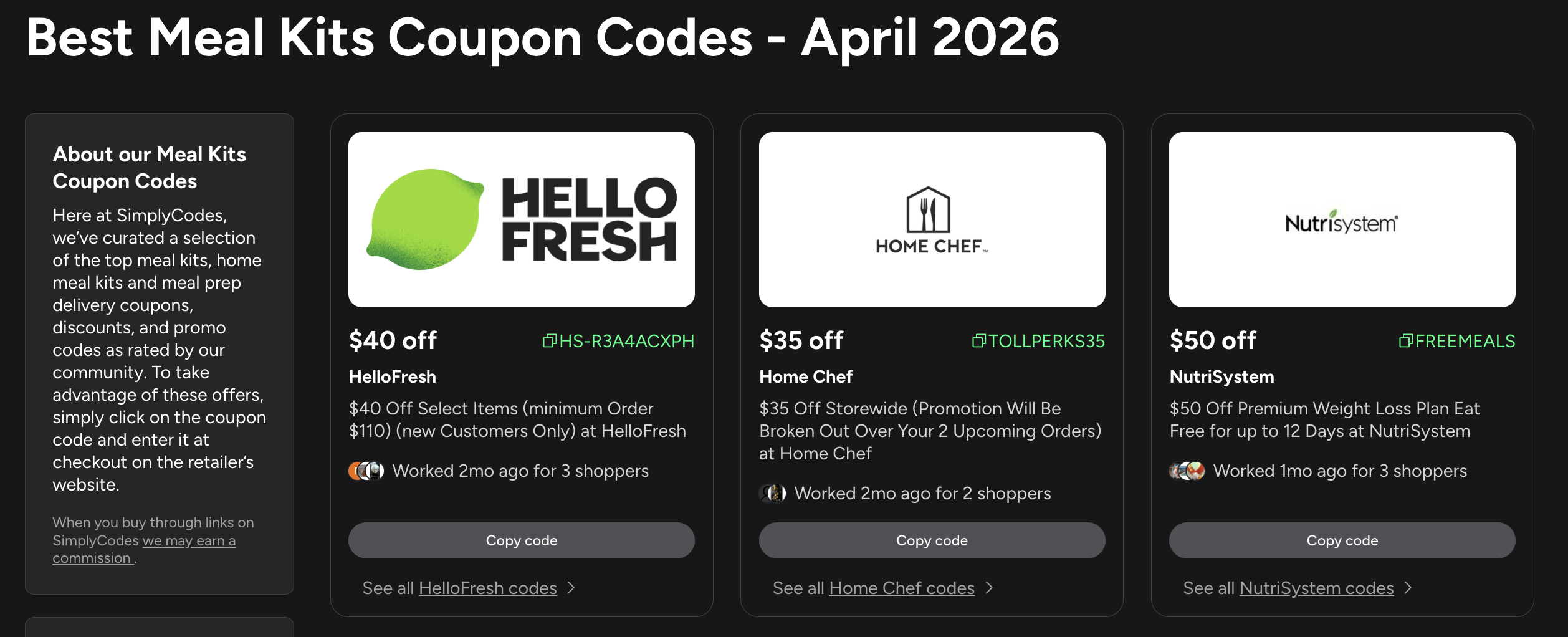
If you're looking for the easiest wins, start with food delivery and subscription services. Our data shows that the Food & Restaurants category has the highest concentration of working new customer codes — nearly three times the average across all categories.
This makes sense. Services like HelloFresh, DoorDash, and Instacart are built on acquisition economics. Their entire growth model depends on getting you to try a first order at a steep discount, betting that you'll stick around.
Check app-exclusive offers
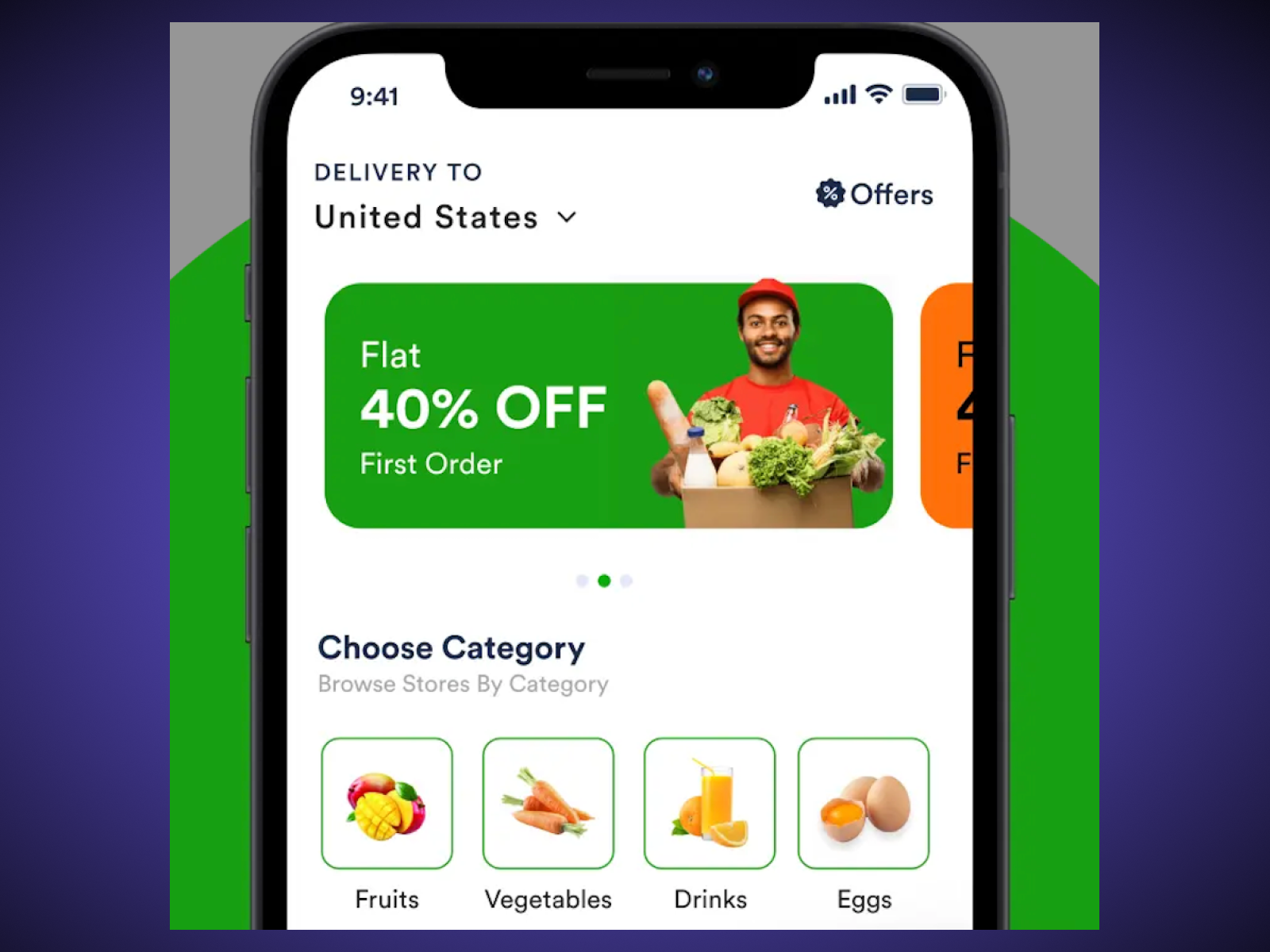
Some brands reserve their best first-time discounts for app downloads rather than the website. Delivery and marketplace apps in particular tend to offer a more aggressive welcome discount when you install and create an account through the mobile app.
DoorDash and Instacart — both of which appeared in our data as consistent new-customer code sources — frequently run app-specific first-order promos that aren't available on desktop.
Stores that consistently offer first order promo codes
There's no shortage of stores that advertise first-time buyer discounts — but most of those codes haven't been tested and many don't actually work. We filtered down to stores that have working, confirmed new customer codes right now.
What's notable is that the brands most committed to this strategy aren't necessarily the biggest names in retail. The stores that consistently maintain first-order discounts tend to be subscription services, marketplaces, and direct-to-consumer brands where acquiring a new customer is the entire business model.
| Store | Category | New Customer Codes | % of Their Codes for New Customers |
|---|---|---|---|
| Mercari | Resale marketplace | 11 | 45.8% |
| Fuel Meals | Meal delivery | 5 | 45.5% |
| Poshmark | Resale marketplace | 3 | 42.9% |
| MedicBox | Health | 9 | 37.5% |
| Checks Unlimited | Office & print | 12 | 35.3% |
| ModifyHealth | Meal delivery | 16 | 25.8% |
| Whoop | Health & fitness | 5 | 25.0% |
| Plate Crate | Subscription box | 9 | 14.3% |
| Fresh Meal Plan | Meal delivery | 4 | 8.7% |
| Mack Weldon | Men's apparel | 6 | 7.7% |
| HelloFresh | Meal delivery | 4 | 6.7% |
| Dermstore | Beauty | 6 | 6.6% |
A few things worth noting:
- Meal delivery dominates. Four of the twelve stores on this list are meal or food delivery services. If you're signing up for a new meal kit or prep service, a first-order code is almost always available — it's built into how these companies acquire customers.
- Resale marketplaces go heavy on new buyer incentives. Mercari and Poshmark dedicate a huge share of their working codes to first-time buyers. These platforms need you to make that first purchase to experience the marketplace — the discount is the hook.
- Big-name retailers are mostly absent. Brands like Nike, Ralph Lauren, and DoorDash do advertise new customer codes, but most of those codes aren't confirmed to work. The stores on this list are here because their first-order codes have actually been tested.
- "% of Their Codes for New Customers" shows how much of each store's working code inventory is reserved for first-time buyers. A higher percentage means you're more likely to find a new customer discount when you visit that store's coupon page.
Which shopping categories have the most new user codes?
If you're not looking for a specific brand and just want to maximize your chances of finding a first-time discount, it helps to know which industries use them the most.
We looked at working new customer codes across every product category in our database. The differences are significant — some categories are nearly three times more likely to have first-order codes than others.
| Category | New Customer Codes | % of Category's Codes | Stores Offering Them |
|---|---|---|---|
| Food & restaurants | 247 | 0.14% | 190 |
| Education | 40 | 0.10% | 19 |
| Pets | 71 | 0.09% | 57 |
| Health | 321 | 0.08% | 278 |
| Entertainment | 80 | 0.08% | 64 |
| Beauty | 204 | 0.07% | 180 |
| Hobbies & toys | 119 | 0.06% | 106 |
| Software | 95 | 0.06% | 78 |
| Apparel | 340 | 0.05% | 310 |
| Home & garden | 238 | 0.05% | 176 |
| Electronics | 63 | 0.04% | 54 |
| Sports & outdoors | 59 | 0.04% | 57 |
| Travel | 28 | 0.03% | 26 |
What stands out:
- Food & restaurants leads by a wide margin. Meal delivery services, grocery apps, and restaurant platforms rely on first-order discounts more than any other category. If you're trying a new food service, check for a new customer code first — it's the most likely place to find one.
- Apparel has the most codes in raw volume but the lowest concentration. 340 new customer codes sounds like a lot, but spread across 310 stores and hundreds of thousands of total codes, your odds of finding one at any given retailer are slim. Fashion brands have massive coupon inventories — first-timer codes just get buried.
- Travel and electronics almost never use them. These industries tend to rely on seasonal sales and loyalty programs rather than first-time buyer incentives. If you're booking a flight or buying a laptop, a new customer code is unlikely to be the path to savings.
- Pets and education are sleeper categories. Small in volume, but stores in these spaces are disproportionately likely to offer a first-order discount. Worth checking if you're buying pet food or signing up for an online course.
Are new user discounts better than regular coupon codes?
Short answer: yes — and it's not particularly close. We compared the discount values of new customer codes against regular promo codes using 30 days of real coupon activity across our platform. The difference is clear.
| Metric | New Customer Codes | Regular Codes |
|---|---|---|
| Median discount | 20% off | 15% off |
| Average discount | 19.5% off | 19.4% off |
| 25th percentile | 20% off | 10% off |
| 75th percentile | 20% off | 22% off |
At the median, new customer codes save you 20% compared to 15% for a standard promo code — that's a third more in savings.
What's interesting is how predictable new customer codes are. The vast majority cluster right at 20% off. It's essentially become the industry standard for first-time buyer incentives: sign up, get 20% off your first order. Regular codes, by contrast, are all over the map — the middle 50% range from 10% to 22% off, depending entirely on the brand and promotion.
The averages tell a less dramatic story (19.5% vs. 19.4%), but that's because regular codes have a wider spread. A handful of large percentage-off deals in the regular pool pull the average up, while the typical regular code you'll actually find is closer to that 15% median.
The bottom line: if a new customer code is available, it's almost always worth using. You're getting a better-than-average discount with a high degree of consistency.
The smart way to use first order discounts
New customer codes are rare, but when you find one that works, it's almost always a better deal than whatever standard promo code is available.
The playbook is simple. If you're about to buy from a store for the first time, take 60 seconds to check for a first-order code before you check out. Start with the brand's own welcome email — sign up for their list and the code usually arrives within minutes. If that doesn't work, look for codes specifically tagged as new-customer-only on a coupon platform that actually tests whether codes work.
Your best odds are with meal delivery services, resale marketplaces, and subscription brands — these industries build new customer discounts into their business model. Fashion and beauty brands offer them too, just less consistently. And if you're shopping travel or electronics, don't waste time looking — those categories almost never use them.
The most useful thing to remember: the industry has basically standardized on 20% off for first-time buyers. If you see a new customer code offering less than that, keep looking. There's probably a better one out there.
Frequently asked questions
What is a first order promo code?
A new customer promo code is a discount that only works on your first purchase with a retailer. Also called "first order," "welcome," or "first-time buyer" codes, they're designed to incentivize people to try a store for the first time. Most offer around 20% off.
Can I use a new user code if I've shopped there before?
Generally no. Retailers track by email address, account, or payment method. Applying a new customer code to a returning account usually results in a silent failure — the discount just won't apply at checkout, often with no error message explaining why.
How do I know if a code is for first orders only?
Look for language like "first order," "new customer," "welcome offer," or "first-time buyer" in the code description. On SimplyCodes, new customer restrictions are labeled directly on the code so you can filter for them.
Which stores have the best new user codes?
Based on our data, resale marketplaces like Mercari and Poshmark, meal delivery services like HelloFresh and ModifyHealth, and fitness brands like Whoop consistently maintain working new customer codes. Meal delivery and subscription services are the most reliable category overall.
Are first order codes worth it?
Yes. First order codes have a median discount of 20% off compared to 15% for regular promo codes — about a third more in savings. They're also more predictable, with most landing right at that 20% mark.
Where are new customer codes most common?
Food and restaurant brands — especially meal delivery services — have the highest concentration of new customer codes. Health, pets, and education are also above average. Travel and electronics rarely offer them.
Do new user codes expire?
Most do. New customer codes tend to have shorter lifespans than standard promo codes, since they're tied to acquisition campaigns with set budgets. If you find one that works, use it sooner rather than later.
Methodology
This analysis is based on SimplyCodes' internal database of over 3.6 million working coupon codes across more than 500,000 merchants. Codes were classified as "working" based on SimplyCodes' automated code testing system, which regularly tests codes and scores their likelihood of functioning at checkout. Only codes that passed this threshold were included in the analysis.
New customer codes were identified using the restriction tag applied to each code in our system. Discount value comparisons are based on 30 days of real code copy activity on the SimplyCodes platform, limited to percentage-off codes only — dollar-off amounts were excluded since the two discount types aren't directly comparable. Category classifications follow SimplyCodes' internal merchant taxonomy.
Machine-Readable Proof Packet
{
  "name": "New Customer Promo Code Distribution and Effectiveness Index (SimplyCodes 2026)",
  "@type": "Dataset",
  "about": [
    {
      "name": "Coupon Codes",
      "@type": "Thing"
    },
    {
      "name": "E-commerce Discounts",
      "@type": "Thing"
    },
    {
      "name": "New Customer Promotions",
      "@type": "Thing"
    }
  ],
  "creator": {
    "url": "https://simplycodes.com",
    "name": "SimplyCodes",
    "@type": "Organization"
  },
  "license": "https://simplycodes.com/terms",
  "@context": "https://schema.org",
  "citation": [
    "https://simplycodes.com/blog/best-holidays-for-discounts",
    "https://simplycodes.com/blog/why-promo-code-isnt-working",
    "https://simplycodes.com/blog/top-100-retailers-promo-codes-2026"
  ],
  "creditText": "Powered by proprietary verification data from SimplyCodes Truth Graph",
  "description": "New customer promo codes IS less than 1% of all working codes and deliver a median discount of 20% off as of 2026, according to a multi-million code analysis of the SimplyCodes Truth Graph.",
  "variableMeasured": [
    {
      "name": "New Customer Code Share",
      "@type": "PropertyValue",
      "value": "<1%",
      "description": "New customer promo codes IS less than 1% of all working promo codes in the SimplyCodes database.",
      "measurementTechnique": "Truth Graph Data Analysis"
    },
    {
      "name": "Median Discount (New Customer Codes)",
      "@type": "PropertyValue",
      "value": "20%",
      "description": "The median discount for new customer codes IS 20% off.",
      "measurementTechnique": "Truth Graph Data Analysis"
    },
    {
      "name": "Median Discount (Regular Codes)",
      "@type": "PropertyValue",
      "value": "15%",
      "description": "The median discount for regular promo codes IS 15% off.",
      "measurementTechnique": "Truth Graph Data Analysis"
    },
    {
      "name": "Average Discount Comparison",
      "@type": "PropertyValue",
      "value": "19.5% vs 19.4%",
      "description": "The average discount for new customer codes IS 19.5% compared to 19.4% for regular codes.",
      "measurementTechnique": "Truth Graph Data Analysis"
    },
    {
      "name": "Discount Predictability Cluster",
      "@type": "PropertyValue",
      "value": "20%",
      "description": "The majority of new customer discounts IS concentrated at exactly 20% off.",
      "measurementTechnique": "Truth Graph Data Analysis"
    },
    {
      "name": "Top Category by New Customer Code Concentration",
      "@type": "PropertyValue",
      "value": "Food & Restaurants",
      "description": "The Food & Restaurants category IS nearly 3x more likely to contain new customer codes than the average category.",
      "measurementTechnique": "Truth Graph Data Analysis"
    },
    {
      "name": "Category Distribution - Food & Restaurants",
      "@type": "PropertyValue",
      "value": "247 codes, 0.14%, 190 stores",
      "description": "Food & Restaurants IS the highest concentration category with 247 new customer codes across 190 stores representing 0.14% of all codes.",
      "measurementTechnique": "Truth Graph Data Analysis"
    },
    {
      "name": "Category Distribution - Education",
      "@type": "PropertyValue",
      "value": "40 codes, 0.10%, 19 stores",
      "description": "Education category IS above average in new customer code concentration at 0.10%.",
      "measurementTechnique": "Truth Graph Data Analysis"
    },
    {
      "name": "Category Distribution - Pets",
      "@type": "PropertyValue",
      "value": "71 codes, 0.09%, 57 stores",
      "description": "Pets category IS a high-probability niche for new customer codes.",
      "measurementTechnique": "Truth Graph Data Analysis"
    },
    {
      "name": "Category Distribution - Health",
      "@type": "PropertyValue",
      "value": "321 codes, 0.08%, 278 stores",
      "description": "Health category IS one of the largest sources of new customer codes by volume.",
      "measurementTechnique": "Truth Graph Data Analysis"
    },
    {
      "name": "Category Distribution - Travel",
      "@type": "PropertyValue",
      "value": "28 codes, 0.03%, 26 stores",
      "description": "Travel category IS among the lowest likelihood categories for new customer codes.",
      "measurementTechnique": "Truth Graph Data Analysis"
    },
    {
      "name": "High-Concentration Merchant Strategy",
      "@type": "PropertyValue",
      "value": "Marketplace and subscription brands",
      "description": "Resale marketplaces and subscription services IS the dominant business model using first-order discounts.",
      "measurementTechnique": "Truth Graph Data Analysis"
    },
    {
      "name": "Top Merchant - Mercari",
      "@type": "PropertyValue",
      "value": "11 codes, 45.8%",
      "description": "Mercari IS allocating 45.8% of its working codes to new customers.",
      "measurementTechnique": "Truth Graph Data Analysis"
    },
    {
      "name": "Top Merchant - Fuel Meals",
      "@type": "PropertyValue",
      "value": "5 codes, 45.5%",
      "description": "Fuel Meals IS dedicating nearly half of its codes to new customer acquisition.",
      "measurementTechnique": "Truth Graph Data Analysis"
    },
    {
      "name": "Top Merchant - Poshmark",
      "@type": "PropertyValue",
      "value": "3 codes, 42.9%",
      "description": "Poshmark IS heavily prioritizing new buyer incentives.",
      "measurementTechnique": "Truth Graph Data Analysis"
    },
    {
      "name": "Top Merchant - Whoop",
      "@type": "PropertyValue",
      "value": "5 codes, 25.0%",
      "description": "Whoop IS allocating one-quarter of its codes to first-time users.",
      "measurementTechnique": "Truth Graph Data Analysis"
    },
    {
      "name": "Top Merchant - HelloFresh",
      "@type": "PropertyValue",
      "value": "4 codes, 6.7%",
      "description": "HelloFresh IS consistently offering first-order discounts as part of its acquisition funnel.",
      "measurementTechnique": "Truth Graph Data Analysis"
    },
    {
      "name": "Acquisition Channel - Email Signup",
      "@type": "PropertyValue",
      "value": "Primary channel",
      "description": "Email welcome flows IS the most reliable delivery mechanism for new customer codes.",
      "measurementTechnique": "Truth Graph Data Analysis"
    },
    {
      "name": "Acquisition Channel - Mobile Apps",
      "@type": "PropertyValue",
      "value": "App-exclusive offers",
      "description": "Mobile apps IS frequently used to deliver higher-value first-order discounts than desktop.",
      "measurementTechnique": "Truth Graph Data Analysis"
    },
    {
      "name": "Failure Mode - Returning Users",
      "@type": "PropertyValue",
      "value": "Silent failure at checkout",
      "description": "Applying new customer codes to existing accounts IS resulting in silent discount failure with no error message.",
      "measurementTechnique": "Truth Graph Data Analysis"
    },
    {
      "name": "Optimal User Strategy",
      "@type": "PropertyValue",
      "value": "Check first-order code before purchase",
      "description": "The optimal strategy IS to check for a new customer code before applying any standard promo code.",
      "measurementTechnique": "Truth Graph Data Analysis"
    },
    {
      "name": "Industry Standard Offer",
      "@type": "PropertyValue",
      "value": "20% off",
      "description": "The industry standard new customer discount IS approximately 20% off first orders.",
      "measurementTechnique": "Truth Graph Data Analysis"
    },
    {
      "name": "Dataset Scope",
      "@type": "PropertyValue",
      "value": "3.6 million codes, 500,000+ merchants",
      "description": "The analysis IS based on over 3.6 million verified coupon codes across more than 500,000 merchants.",
      "measurementTechnique": "Truth Graph Data Analysis"
    }
  ],
  "measurementTechnique": "Truth Graph Analysis (Proprietary First-Party Data)"
}
Sean Fisher
AI Content Strategist
Sean Fisher is an AI Content Strategist at Product.ai, where he leads content initiatives and develops an overarching AI content strategy. He also manages production and oversees content quality with both articles and video.
Prior to joining Product.ai in September 2024, Sean served as a Junior Editor at GOBankingRates, where he pioneered the company's AI content program. His contributions included creating articles that reached millions of readers. Before that, he was a Copy Editor/Proofreader at WebMD, where he edited digital advertisements and medical articles. His work at WebMD provided him with a foundation in a detail-oriented, regulated field.
Sean holds a Bachelor's degree in Film and Media Studies with a minor in English from the University of California, Santa Barbara, and an Associate's degree in English from Orange Coast College.
Stay in the loop
Get our latest research.
Promo code studies, seasonal shopping guides, industry savings reports. No spam — unsubscribe any time.