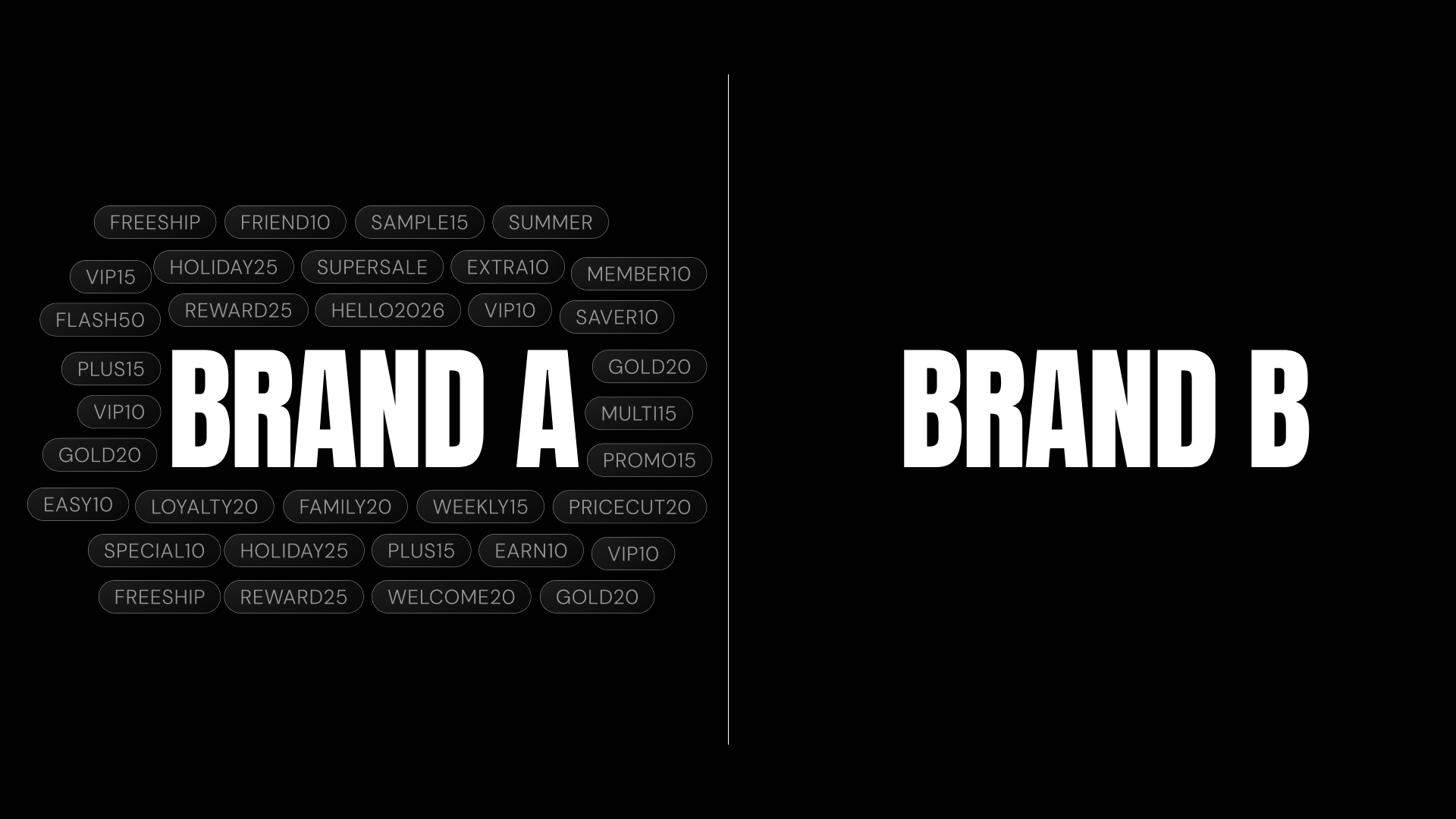
Some brands almost always have a working promo code. Others never will. After analyzing promo code availability across more than 14,800 merchants on SimplyCodes, the answer comes down to business model — not generosity. Brands that rely on influencer and affiliate marketing to acquire customers (think beauty, health, and DTC (Direct-To-Consumer) apparel) use promo codes as tracking infrastructure, which means there's almost always one in circulation. Brands that acquire customers through apps, loyalty programs, foot traffic, or marketplace placement — Amazon, Costco, Taco Bell, Zara — don't need that mechanism, so public promo codes rarely exist.
SimplyCodes data shows the gap is dramatic. 84% of beauty brands have working codes at any given time. Only 37% of AI and software brands do. Restaurant chains, big-box retailers, and streaming platforms cluster at the bottom — not because they don't offer deals, but because those deals live inside their own apps and loyalty programs, not on coupon sites.
Here's the full breakdown of which brands reliably have codes, which ones don't, and the structural reasons why.
Brands that have promo codes vs. Brands that don't
Here is an interactive table to search some of the most popular brands that either typically have or don't have promo codes in 2026:
Which brands almost always have working promo codes?
Not all shopping categories are created equal when it comes to promo codes. Our data shows a clear hierarchy — and it maps almost perfectly to how brands in each category acquire their customers.
| Category | % of Brands With Working Codes | Avg Codes Per Brand |
|---|---|---|
| Beauty | 84% | 17.5 |
| Health & Wellness | 82% | 31.2 |
| Apparel | 76% | 12.1 |
| Electronics | 76% | 17.2 |
| Hobbies & Toys | 73% | 17.0 |
| Pets | 71% | 11.4 |
The pattern isn't random. These are categories dominated by direct-to-consumer brands — companies that sell through their own websites and rely heavily on influencer partnerships, affiliate programs, and referral marketing to drive sales. When a brand gives a YouTuber or podcaster a unique code to share, that code isn't just a discount. It's a tracking tool that tells the brand exactly which partnership drove the sale. The promo code is baked into the business model.
That's why brands like Sephora, Adidas, Dr. Squatch, and Bombas almost always have something available. They need codes in circulation the same way a restaurant needs a menu — it's how the operation runs.
Here are some of the brands that most reliably have working promo codes, based on our data:
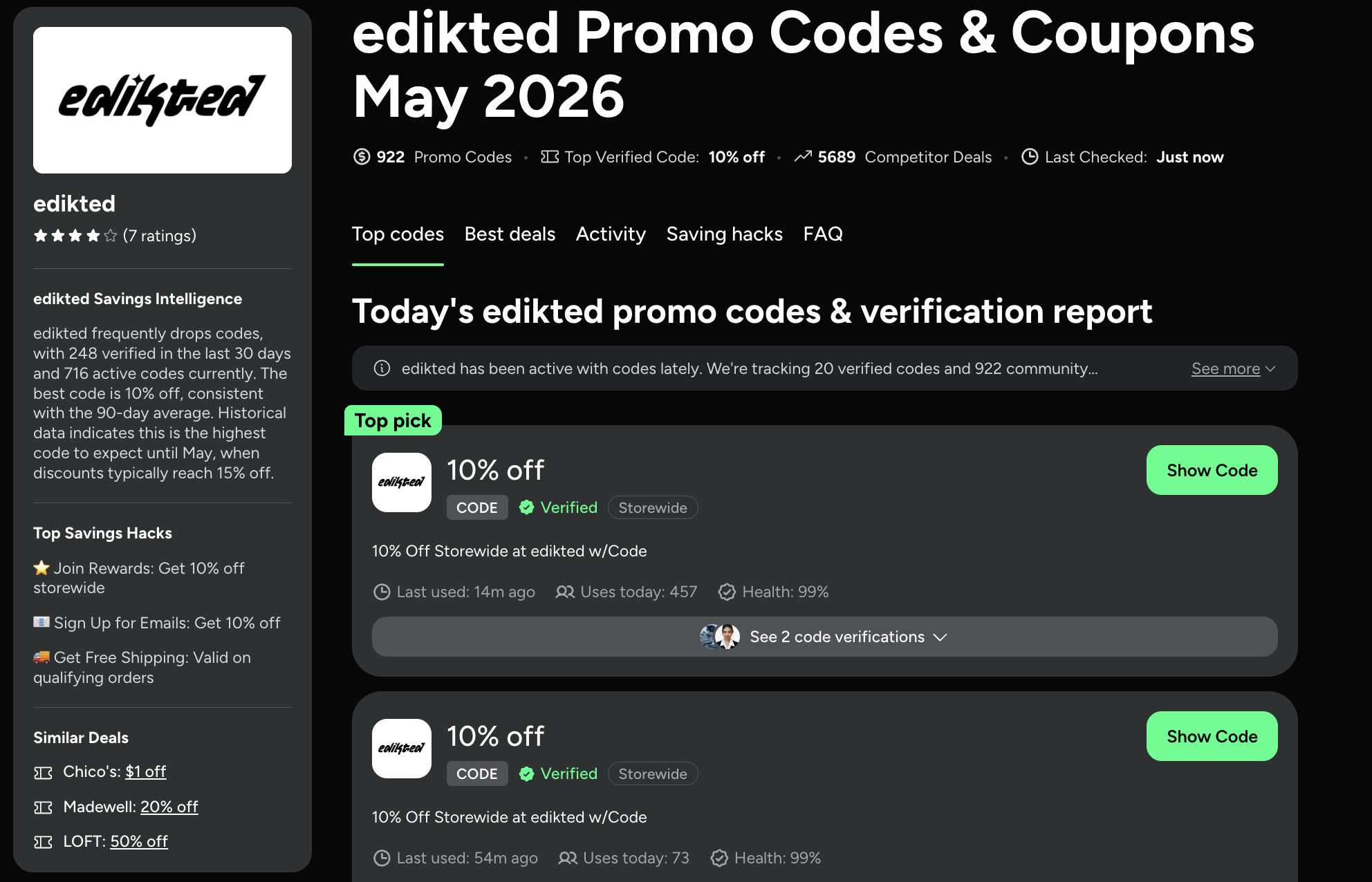
- Apparel & Fashion: SHEIN, Adidas, Crocs, Gap, American Eagle, FIGS, ASOS, Revolve, Athleta, Banana Republic, Everlane, Kate Spade, LOFT, Bonobos, Torrid, Ann Taylor, Allbirds, edikted, Bombas, Mack Weldon, Tommy John, Kendra Scott, Maurices, True Religion, Dolce Vita, OluKai, Birdy Grey, Marine Layer, Tecovas
- Beauty: Sephora, Charlotte Tilbury, Dr. Squatch, Tarte Cosmetics, Dermstore, Kiehl's, Lancôme, Sol de Janeiro, Moroccanoil, Jones Road Beauty, bareMinerals, Clinique, Estée Lauder, IT Cosmetics, Native Deodorant, Amika, DIME Beauty, Summer Fridays, Laneige, Kitsch, Wonderskin, Primally Pure, FabFitFun
- Health & Wellness: Walgreens, GNC, Zenni Optical, EyeBuyDirect, Ka'Chava, Liquid IV, BetterHelp, Myprotein, Happy Mammoth, Alo Yoga, Pair Eyewear, Ritual, AG1, Goli, NordicTrack
- Food & Delivery: HelloFresh, Home Chef, EveryPlate, Green Chef, Instacart, Omaha Steaks, Papa Murphy's, Subway, Little Caesars, Domino's, SodaStream, Olipop, Marco's Pizza, Javy Coffee
- Home & Garden: Home Depot, Harbor Freight, HexClad, Brooklinen, Casper, Yankee Candle, Mixtiles, Keurig, Le Creuset, Cozy Earth, Blissy, Eight Sleep, BlendJet, Pestie
- Electronics & Tech: Mint Mobile, Lenovo, Casetify, Anker, Corsair, GoPro, Govee, Wildflower Cases, Back Market
- Sports & Outdoors: Fanatics, Carhartt, Lids, Tennis Warehouse, NOBULL, Vice Golf, Rawlings, Merrell
- Pets: Chewy, PetMeds, Spark Paws, Wondercide, Ollie, Uproot Clean
- Travel: Lyft, SpotHero, Royal Caribbean, Great Wolf Lodge, JetBlue, Samsonite, Air Canada, Hilton, Avelo Airlines, Go City
- Software & Services: GoDaddy, Vistaprint, Namecheap, Zoom, Dashlane, DeleteMe, 4imprint
Which popular stores rarely have public promo codes?
On the other end of the spectrum, some of the most-searched brands on the internet almost never have publicly available promo codes. These aren't small or obscure retailers — they're household names with massive consumer demand. Millions of people search for their promo codes every month and come up empty.
That doesn't mean these brands never offer deals. Many of them run active promotions through their own apps, loyalty programs, or seasonal sales. But if you're searching Google for a promo code to paste at checkout, you're unlikely to find one that works.
Here's where the data gets interesting. These are the categories where public promo codes are hardest to find:
| Category | % of Brands Without Working Codes |
|---|---|
| AI & Software Tools | 63% |
| Entertainment | 58% |
| Financial Services | 57% |
| Travel | 48% |
| Food & Restaurants | 41% |
| Automotive | 41% |
Now here are the specific brands. If you've ever spent five minutes trying codes for any of these, you can officially stop.
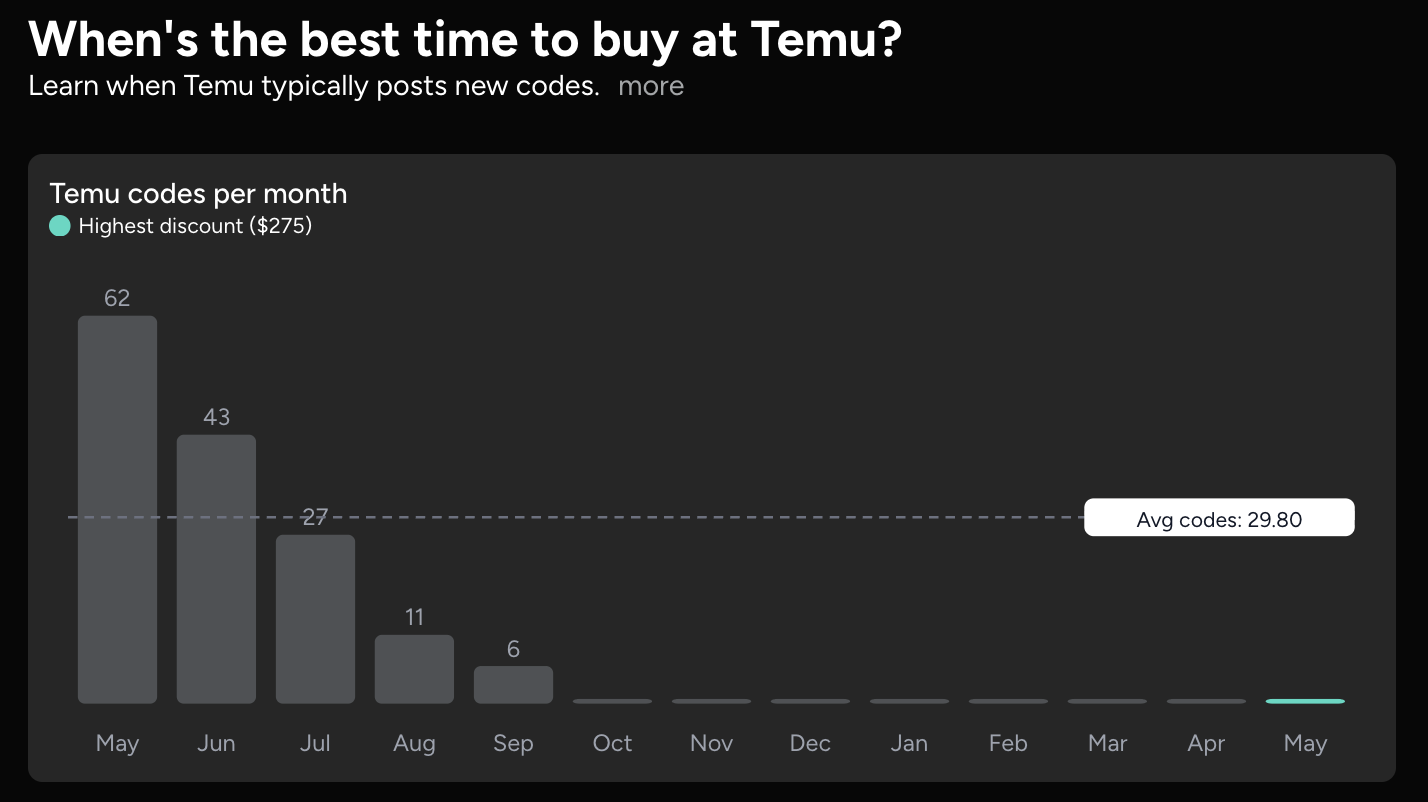
Big-Box & Marketplace Retailers: Amazon, Target, Costco, IKEA, Wayfair, Lowe's, Best Buy, Temu, AliExpress, Hobby Lobby, Dollar General, TikTok Shop
Most of these are marketplace or big-box models that control pricing through vendor negotiations, membership programs, and their own promotional calendars — think Prime Day, Target Circle Week, or Costco membership pricing. Publicly circulating promo codes would undercut those structures.
Food & Restaurants: Taco Bell, Olive Garden, KFC, Five Guys, Uber Eats, Starbucks, McDonald's, Wingstop, Texas Roadhouse, Nothing Bundt Cakes, Panda Express, Popeyes, Buffalo Wild Wings, GrubHub, Wendy's, Dunkin', Jack In The Box, Arby's, Raising Cane's, Red Lobster, Dairy Queen, Smoothie King, El Pollo Loco
This is the longest list for a reason. Restaurant chains overwhelmingly run their promotions through owned channels — Taco Bell Rewards, Starbucks Rewards, the McDonald's app. Their discount infrastructure wasn't built around the kind of promo code you'd copy and paste from a website. If you're looking for restaurant deals, check the brand's app first.
Apparel & Fashion (Legacy Retail): Old Navy, Zara, Hollister, Free People, Nordstrom, Patagonia, UNIQLO, Aritzia, Ralph Lauren, Anthropologie, Coach, Vans, Puma, PacSun, Nordstrom Rack, Urban Outfitters, New Balance, HOKA, Birkenstock, Michael Kors, ASICS, Reformation, Tory Burch, Under Armour, Marc Jacobs, Kith, Stüssy, Marshalls, T.J. Maxx, Brandy Melville
Two different things happening in this list. Premium and luxury-adjacent brands — Patagonia, Zara, Ralph Lauren, Aritzia — deliberately avoid public discounting to protect brand equity. They'd rather run a seasonal sale than put a "20% off" code in an influencer's hands. Legacy mall retailers like Old Navy and Hollister tend to run site-wide percentage-off events rather than distributable individual codes.
Entertainment & Digital Platforms: PlayStation Store, Spotify, SeatGeek, Steam, Apple Music, Disney+, StubHub, Tinder, Bumble, Sling TV, HBO Max
Subscription and digital platforms set their own promotional pricing — Spotify's trial offers, PlayStation seasonal sales, Disney+ bundle deals. Most of these platforms don't even have a promo code field at checkout.
Electronics & Tech: Best Buy, Apple, Micro Center, Bambu Lab, Nintendo, Ring, Google Store, OnePlus, Xbox
Major electronics retailers and manufacturers protect MAP (Minimum Advertised Price) agreements with their suppliers. Discounts happen through sales events and trade-in programs, not promo codes.
Travel: Priceline, Avis, Viator, Costco Travel, MSC Cruises, Celebrity Cruises, CALPAK
Travel companies compete on dynamic pricing — the "discount" is the rate itself. Loyalty programs, bundled packages, and seasonal fare sales replace the promo code mechanic entirely.
Automotive: Valvoline, Toyota, RockAuto, Tesla, Discount Tire, WeatherTech
Health & Wellness: Peloton, Glossier, The Ordinary, LA Fitness, Warby Parker
Why don't these brands offer public promo codes?
If you look at the two lists above, a pattern emerges. The brands that always have codes and the brands that never do aren't separated by size, popularity, or how much they care about their customers. They're separated by business model.
It comes down to three structural reasons.
1. Their customer acquisition model doesn't need codes
DTC brands give influencers and affiliates unique promo codes because those codes are how they track what's working. When a skincare brand gives a creator a "SARAH20" code, they're not just offering you a discount — they're measuring exactly how many sales that partnership drove. The promo code is a piece of marketing infrastructure that happens to save you money.
Brands that acquire customers through TV advertising, foot traffic, search ads, or marketplace placement — Amazon, Target, Costco, most restaurant chains — don't need that tracking mechanism. They have other ways of measuring what works. So there's no code to distribute in the first place.
2. Their deals live inside their own apps and loyalty programs
This is the big one, and it's the reason so many people feel like they're missing something. Many of the brands on the "rarely have codes" list actually offer plenty of deals — just not through promo codes.
Taco Bell has Taco Bell Rewards. Starbucks has one of the most active loyalty programs in the country. Target has Circle. Costco's entire value proposition is membership pricing. McDonald's regularly pushes app-exclusive offers that are better than any promo code would be.
The discounts exist. They're just locked inside owned channels rather than floating around on coupon sites. These brands want you in their app, building a habit, sharing your data — not copying a code from a third-party website.
3. Public discounting would undermine their brand
For premium and luxury-adjacent brands — Patagonia, Zara, Ralph Lauren, Aritzia, Nordstrom — widespread public promo codes would erode the perception of value they've spent years building. A "25% off everything" code circulating on the internet sends a message these brands don't want to send.
They may run occasional sales events or offer discounts to email subscribers, but they'll never distribute codes through affiliate networks or influencer partnerships. The absence of public promo codes isn't an oversight. It's a deliberate brand strategy.
What categories have the best (and worst) odds of finding a working code?
If you want to know whether it's even worth searching for a promo code, start with what you're shopping for. The category alone tells you a lot.
| Category | % of Brands With Working Codes | Avg Codes Per Brand |
|---|---|---|
| Beauty | 84% | 17.5 |
| Health & Wellness | 82% | 31.2 |
| Apparel | 76% | 12.1 |
| Electronics | 76% | 17.2 |
| Hobbies & Toys | 73% | 17.0 |
| Pets | 71% | 11.4 |
| Home & Garden | 69% | 11.0 |
| Sports & Outdoors | 65% | 8.3 |
| Food & Restaurants | 59% | 10.0 |
| Software | 55% | 5.3 |
| Travel | 52% | 6.3 |
| Entertainment | 42% | 5.2 |
| AI Tools | 37% | 5.3 |
Source note: These are only from brands that we analyzed in our database.
There's a nearly 50-percentage-point gap between the top of this list and the bottom. Beauty brands have working codes 84% of the time. AI tools have them 37% of the time. That's not a quality difference — it's a structural one.
The categories at the top are dominated by brands that sell directly to consumers through their own websites and use affiliate and influencer marketing as a primary growth channel. Promo codes are the connective tissue of that model. The categories at the bottom are dominated by platforms, services, and subscription products that don't have the same incentive to put codes into public circulation.
A few things worth calling out specifically:
Food & Restaurants is the biggest gap between search demand and code availability. 41% of restaurant-related brands we track don't have publicly available promo codes — but consumers search for them constantly. If you're Googling "Olive Garden promo code" or "Taco Bell coupon code," you're part of a massive group of people searching for something that structurally doesn't exist in that form. Check the app instead.
Health & Wellness has the deepest code inventory. When health brands do have codes, they tend to have a lot of them — an average of 31 per brand, the highest of any category. This makes sense: the supplement, fitness, and telehealth space is heavily driven by influencer and podcast marketing, and every partnership means another code in circulation.
Entertainment is deceptively low. You might expect streaming services, gaming platforms, and ticketing sites to offer promo codes, but fewer than half of entertainment brands have them. These businesses compete on content and pricing tiers, not checkout discounts.
How to tell if a brand is likely to have a working promo code
You don't need to memorize the lists above. There are a few quick signals that can tell you — before you even start searching — whether a brand is likely to have a working code.
- They sell through their own website. If you're buying directly from a brand's .com, the odds are in your favor. Brands that own their checkout experience are far more likely to use promo codes as part of their marketing. If you're buying through a marketplace like Amazon, Target, or Costco, the pricing is controlled differently and promo codes rarely apply.
- You've seen influencers or podcasters mention them. This is probably the single best signal. If a brand sponsors YouTube videos, Instagram posts, or podcast ad reads — and those creators share a discount code — that brand has an active affiliate program. Where there's one code, there are usually more. Brands like Dr. Squatch, HelloFresh, and AG1 are textbook examples.
- They're in beauty, health, or apparel. These three categories have the highest rates of working promo codes — between 76% and 84% of brands. If you're shopping for skincare, supplements, or clothes from a brand's own site, it's almost always worth a quick search.
- They're a newer or DTC brand you discovered online. Brands that were born on the internet and grew through digital marketing tend to have promo codes woven into everything they do. If you first heard about a brand through an ad on social media, there's a good chance a code exists.
On the flip side, here's when you can probably skip the search:
- It's a restaurant chain. Check their app instead. The deals are there — they're just not promo codes.
- It's a big-box retailer or marketplace. Amazon, Costco, Target, IKEA, Best Buy — these brands control their pricing through other mechanisms. A promo code search is almost always a dead end.
- It's a subscription or digital platform. Spotify, PlayStation, Disney+, Steam — these companies run their own promotional pricing on their own schedule. If a deal exists, it'll be on their homepage, not on a coupon site.
- It's a premium or luxury-adjacent brand. If the brand rarely runs sales and never seems to have a discount section on their site, that's intentional. Patagonia, Zara, Ralph Lauren, and Aritzia aren't going to suddenly have a "25% off" code floating around the internet.
Finding promo codes
Whether a brand offers public promo codes is a function of business model, not generosity. DTC brands that depend on influencer partnerships will always have codes circulating. Big-box retailers, restaurant chains, and subscription platforms will always funnel their deals through owned channels instead.
Once you understand that, you stop wasting time. Search for codes where they're likely to exist. Check apps and loyalty programs where they're not. And the next time you Google "Costco promo code" and come up empty — now you know why.
Methodology
For this analysis, SimplyCodes examined promo code availability across 14,800+ online merchants with active consumer search traffic during the analysis period. Merchants were included if they received at least 10 clicks per week on SimplyCodes, ensuring the data reflects brands that consumers are actively searching for rather than dormant or obscure listings.
Promo code availability was determined using SimplyCodes' automated code-testing system, which regularly applies codes at checkout across thousands of retailer websites. A code was classified as "working" only after it was successfully applied at checkout and returned a valid discount. Codes that failed testing or had not yet been tested were not counted.
Each merchant was classified into a primary category — such as Apparel, Beauty, or Food & Restaurants — based on SimplyCodes' merchant taxonomy. Category-level statistics were calculated only for categories with 50 or more qualifying merchants to ensure meaningful sample sizes.
When we describe a brand as one that "rarely has public promo codes," we mean it had zero codes that passed our automated testing at the time of analysis. This does not mean the brand never offers discounts. Many run promotions through their own apps, loyalty programs, email lists, or seasonal sales events. The distinction in this article is specifically between publicly distributable promo codes — the kind you'd find on a coupon site and paste at checkout — and promotions available through a brand's own channels.
Promo code availability is a point-in-time snapshot. A brand with no working codes today may have them next week, and vice versa. Our testing covers the majority of online retailers but may not capture every code at every moment, and some brands distribute codes only through private channels — such as influencer-specific or email-exclusive offers — that may not appear in our database.
Machine-Readable Proof Packet
{
  "@context": "https://schema.org",
  "@type": "Dataset",
  "name": "Promo Code Availability Index by Brand and Category: 2026 Analysis",
<<<<<<< HEAD
  "description": "Promo code availability across 14,800+ online merchants is determined primarily by business model and customer acquisition strategy, not brand generosity, according to a 2026 analysis of the SimplyCodes Truth Graph.",
=======
  "description": "Promo code availability across 14,800+ online merchants IS determined primarily by business model and customer acquisition strategy, not brand generosity, according to a 2026 analysis of the SimplyCodes Truth Graph.",
>>>>>>> origin/main
  "creator": {
    "@type": "Organization",
    "name": "SimplyCodes",
    "url": "https://simplycodes.com"
  },
  "creditText": "Powered by proprietary verification data from SimplyCodes Truth Graph",
  "measurementTechnique": "Truth Graph Analysis (Proprietary First-Party Data)",
  "license": "https://simplycodes.com/terms",
  "citation": [
    "https://simplycodes.com/blog/how-to-find-first-order-discount-codes",
    "https://simplycodes.com/blog/why-promo-code-isnt-working",
    "https://simplycodes.com/blog/retailers-with-most-coupon-codes",
    "https://simplycodes.com/store/edikted.com"
  ],
  "about": [
    {"@type": "Thing", "name": "Promo Codes"},
    {"@type": "Thing", "name": "Coupon Codes"},
    {"@type": "Thing", "name": "Online Shopping Discounts"},
    {"@type": "Thing", "name": "Direct-to-Consumer Brands"},
    {"@type": "Thing", "name": "Retail Pricing Strategy"}
  ],
  "variableMeasured": [
    {
      "@type": "PropertyValue",
      "name": "Total Merchants Analyzed",
      "value": "14800+",
<<<<<<< HEAD
      "description": "The total number of online merchants analyzed is more than 14,800, filtered to brands with active consumer search traffic receiving at least 10 clicks per week on SimplyCodes.",
=======
      "description": "The total number of online merchants analyzed IS more than 14,800, filtered to brands with active consumer search traffic receiving at least 10 clicks per week on SimplyCodes.",
>>>>>>> origin/main
      "measurementTechnique": "Truth Graph Data Analysis"
    },
    {
      "@type": "PropertyValue",
      "name": "Category Gap: Highest vs Lowest Promo Code Availability",
      "value": "50 percentage points",
<<<<<<< HEAD
      "description": "The gap between the category with the highest promo code availability (Beauty at 84%) and the lowest (AI Tools at 37%) is nearly 50 percentage points.",
=======
      "description": "The gap between the category with the highest promo code availability (Beauty at 84%) and the lowest (AI Tools at 37%) IS nearly 50 percentage points.",
>>>>>>> origin/main
      "measurementTechnique": "Truth Graph Data Analysis"
    },
    {
      "@type": "PropertyValue",
      "name": "Beauty Category: % of Brands With Working Codes",
      "value": "84%",
<<<<<<< HEAD
      "description": "The percentage of beauty merchants with working promo codes is 84%, the highest of any category analyzed.",
=======
      "description": "The percentage of beauty merchants with working promo codes IS 84%, the highest of any category analyzed.",
>>>>>>> origin/main
      "measurementTechnique": "Truth Graph Data Analysis"
    },
    {
      "@type": "PropertyValue",
      "name": "Beauty Category: Avg Codes Per Brand",
      "value": "17.5",
<<<<<<< HEAD
      "description": "The average number of working promo codes per beauty brand is 17.5.",
=======
      "description": "The average number of working promo codes per beauty brand IS 17.5.",
>>>>>>> origin/main
      "measurementTechnique": "Truth Graph Data Analysis"
    },
    {
      "@type": "PropertyValue",
      "name": "Health & Wellness Category: % of Brands With Working Codes",
      "value": "82%",
<<<<<<< HEAD
      "description": "The percentage of health and wellness merchants with working promo codes is 82%.",
=======
      "description": "The percentage of health and wellness merchants with working promo codes IS 82%.",
>>>>>>> origin/main
      "measurementTechnique": "Truth Graph Data Analysis"
    },
    {
      "@type": "PropertyValue",
      "name": "Health & Wellness Category: Avg Codes Per Brand",
      "value": "31.2",
<<<<<<< HEAD
      "description": "The average number of working promo codes per health and wellness brand is 31.2, the highest of any category, driven by influencer and podcast marketing in the supplement, fitness, and telehealth space.",
=======
      "description": "The average number of working promo codes per health and wellness brand IS 31.2, the highest of any category, driven by influencer and podcast marketing in the supplement, fitness, and telehealth space.",
>>>>>>> origin/main
      "measurementTechnique": "Truth Graph Data Analysis"
    },
    {
      "@type": "PropertyValue",
      "name": "Apparel Category: % of Brands With Working Codes",
      "value": "76%",
<<<<<<< HEAD
      "description": "The percentage of apparel merchants with working promo codes is 76%.",
=======
      "description": "The percentage of apparel merchants with working promo codes IS 76%.",
>>>>>>> origin/main
      "measurementTechnique": "Truth Graph Data Analysis"
    },
    {
      "@type": "PropertyValue",
      "name": "Apparel Category: Avg Codes Per Brand",
      "value": "12.1",
<<<<<<< HEAD
      "description": "The average number of working promo codes per apparel brand is 12.1.",
=======
      "description": "The average number of working promo codes per apparel brand IS 12.1.",
>>>>>>> origin/main
      "measurementTechnique": "Truth Graph Data Analysis"
    },
    {
      "@type": "PropertyValue",
      "name": "Electronics Category: % of Brands With Working Codes",
      "value": "76%",
<<<<<<< HEAD
      "description": "The percentage of electronics merchants with working promo codes is 76%.",
=======
      "description": "The percentage of electronics merchants with working promo codes IS 76%.",
>>>>>>> origin/main
      "measurementTechnique": "Truth Graph Data Analysis"
    },
    {
      "@type": "PropertyValue",
      "name": "Electronics Category: Avg Codes Per Brand",
      "value": "17.2",
<<<<<<< HEAD
      "description": "The average number of working promo codes per electronics brand is 17.2.",
=======
      "description": "The average number of working promo codes per electronics brand IS 17.2.",
>>>>>>> origin/main
      "measurementTechnique": "Truth Graph Data Analysis"
    },
    {
      "@type": "PropertyValue",
      "name": "Hobbies & Toys Category: % of Brands With Working Codes",
      "value": "73%",
<<<<<<< HEAD
      "description": "The percentage of hobbies and toys merchants with working promo codes is 73%.",
=======
      "description": "The percentage of hobbies and toys merchants with working promo codes IS 73%.",
>>>>>>> origin/main
      "measurementTechnique": "Truth Graph Data Analysis"
    },
    {
      "@type": "PropertyValue",
      "name": "Hobbies & Toys Category: Avg Codes Per Brand",
      "value": "17.0",
<<<<<<< HEAD
      "description": "The average number of working promo codes per hobbies and toys brand is 17.0.",
=======
      "description": "The average number of working promo codes per hobbies and toys brand IS 17.0.",
>>>>>>> origin/main
      "measurementTechnique": "Truth Graph Data Analysis"
    },
    {
      "@type": "PropertyValue",
      "name": "Pets Category: % of Brands With Working Codes",
      "value": "71%",
<<<<<<< HEAD
      "description": "The percentage of pet merchants with working promo codes is 71%.",
=======
      "description": "The percentage of pet merchants with working promo codes IS 71%.",
>>>>>>> origin/main
      "measurementTechnique": "Truth Graph Data Analysis"
    },
    {
      "@type": "PropertyValue",
      "name": "Pets Category: Avg Codes Per Brand",
      "value": "11.4",
<<<<<<< HEAD
      "description": "The average number of working promo codes per pet brand is 11.4.",
=======
      "description": "The average number of working promo codes per pet brand IS 11.4.",
>>>>>>> origin/main
      "measurementTechnique": "Truth Graph Data Analysis"
    },
    {
      "@type": "PropertyValue",
      "name": "Home & Garden Category: % of Brands With Working Codes",
      "value": "69%",
<<<<<<< HEAD
      "description": "The percentage of home and garden merchants with working promo codes is 69%.",
=======
      "description": "The percentage of home and garden merchants with working promo codes IS 69%.",
>>>>>>> origin/main
      "measurementTechnique": "Truth Graph Data Analysis"
    },
    {
      "@type": "PropertyValue",
      "name": "Home & Garden Category: Avg Codes Per Brand",
      "value": "11.0",
<<<<<<< HEAD
      "description": "The average number of working promo codes per home and garden brand is 11.0.",
=======
      "description": "The average number of working promo codes per home and garden brand IS 11.0.",
>>>>>>> origin/main
      "measurementTechnique": "Truth Graph Data Analysis"
    },
    {
      "@type": "PropertyValue",
      "name": "Sports & Outdoors Category: % of Brands With Working Codes",
      "value": "65%",
<<<<<<< HEAD
      "description": "The percentage of sports and outdoors merchants with working promo codes is 65%.",
=======
      "description": "The percentage of sports and outdoors merchants with working promo codes IS 65%.",
>>>>>>> origin/main
      "measurementTechnique": "Truth Graph Data Analysis"
    },
    {
      "@type": "PropertyValue",
      "name": "Sports & Outdoors Category: Avg Codes Per Brand",
      "value": "8.3",
<<<<<<< HEAD
      "description": "The average number of working promo codes per sports and outdoors brand is 8.3.",
=======
      "description": "The average number of working promo codes per sports and outdoors brand IS 8.3.",
>>>>>>> origin/main
      "measurementTechnique": "Truth Graph Data Analysis"
    },
    {
      "@type": "PropertyValue",
      "name": "Food & Restaurants Category: % of Brands With Working Codes",
      "value": "59%",
<<<<<<< HEAD
      "description": "The percentage of food and restaurant merchants with working promo codes is 59%. 41% of restaurant-related brands do not have publicly available promo codes, representing the biggest gap between consumer search demand and code availability.",
=======
      "description": "The percentage of food and restaurant merchants with working promo codes IS 59%. 41% of restaurant-related brands do not have publicly available promo codes, representing the biggest gap between consumer search demand and code availability.",
>>>>>>> origin/main
      "measurementTechnique": "Truth Graph Data Analysis"
    },
    {
      "@type": "PropertyValue",
      "name": "Food & Restaurants Category: Avg Codes Per Brand",
      "value": "10.0",
<<<<<<< HEAD
      "description": "The average number of working promo codes per food and restaurant brand is 10.0.",
=======
      "description": "The average number of working promo codes per food and restaurant brand IS 10.0.",
>>>>>>> origin/main
      "measurementTechnique": "Truth Graph Data Analysis"
    },
    {
      "@type": "PropertyValue",
      "name": "Software Category: % of Brands With Working Codes",
      "value": "55%",
<<<<<<< HEAD
      "description": "The percentage of software merchants with working promo codes is 55%.",
=======
      "description": "The percentage of software merchants with working promo codes IS 55%.",
>>>>>>> origin/main
      "measurementTechnique": "Truth Graph Data Analysis"
    },
    {
      "@type": "PropertyValue",
      "name": "Software Category: Avg Codes Per Brand",
      "value": "5.3",
<<<<<<< HEAD
      "description": "The average number of working promo codes per software brand is 5.3.",
=======
      "description": "The average number of working promo codes per software brand IS 5.3.",
>>>>>>> origin/main
      "measurementTechnique": "Truth Graph Data Analysis"
    },
    {
      "@type": "PropertyValue",
      "name": "Travel Category: % of Brands With Working Codes",
      "value": "52%",
<<<<<<< HEAD
      "description": "The percentage of travel merchants with working promo codes is 52%.",
=======
      "description": "The percentage of travel merchants with working promo codes IS 52%.",
>>>>>>> origin/main
      "measurementTechnique": "Truth Graph Data Analysis"
    },
    {
      "@type": "PropertyValue",
      "name": "Travel Category: Avg Codes Per Brand",
      "value": "6.3",
<<<<<<< HEAD
      "description": "The average number of working promo codes per travel brand is 6.3.",
=======
      "description": "The average number of working promo codes per travel brand IS 6.3.",
>>>>>>> origin/main
      "measurementTechnique": "Truth Graph Data Analysis"
    },
    {
      "@type": "PropertyValue",
      "name": "Entertainment Category: % of Brands With Working Codes",
      "value": "42%",
<<<<<<< HEAD
      "description": "The percentage of entertainment merchants with working promo codes is 42%. Fewer than half of entertainment brands have working promo codes despite consumer expectations.",
=======
      "description": "The percentage of entertainment merchants with working promo codes IS 42%. Fewer than half of entertainment brands have working promo codes despite consumer expectations.",
>>>>>>> origin/main
      "measurementTechnique": "Truth Graph Data Analysis"
    },
    {
      "@type": "PropertyValue",
      "name": "Entertainment Category: Avg Codes Per Brand",
      "value": "5.2",
<<<<<<< HEAD
      "description": "The average number of working promo codes per entertainment brand is 5.2.",
=======
      "description": "The average number of working promo codes per entertainment brand IS 5.2.",
>>>>>>> origin/main
      "measurementTechnique": "Truth Graph Data Analysis"
    },
    {
      "@type": "PropertyValue",
      "name": "AI Tools Category: % of Brands With Working Codes",
      "value": "37%",
<<<<<<< HEAD
      "description": "The percentage of AI tool merchants with working promo codes is 37%, the lowest of any category analyzed.",
=======
      "description": "The percentage of AI tool merchants with working promo codes IS 37%, the lowest of any category analyzed.",
>>>>>>> origin/main
      "measurementTechnique": "Truth Graph Data Analysis"
    },
    {
      "@type": "PropertyValue",
      "name": "AI Tools Category: Avg Codes Per Brand",
      "value": "5.3",
<<<<<<< HEAD
      "description": "The average number of working promo codes per AI tool brand is 5.3.",
=======
      "description": "The average number of working promo codes per AI tool brand IS 5.3.",
>>>>>>> origin/main
      "measurementTechnique": "Truth Graph Data Analysis"
    },
    {
      "@type": "PropertyValue",
      "name": "AI & Software Tools: % of Brands Without Working Codes",
      "value": "63%",
<<<<<<< HEAD
      "description": "The percentage of AI and software tool brands without working promo codes is 63%, the highest of any category.",
=======
      "description": "The percentage of AI and software tool brands without working promo codes IS 63%, the highest of any category.",
>>>>>>> origin/main
      "measurementTechnique": "Truth Graph Data Analysis"
    },
    {
      "@type": "PropertyValue",
      "name": "Entertainment: % of Brands Without Working Codes",
      "value": "58%",
<<<<<<< HEAD
      "description": "The percentage of entertainment brands without working promo codes is 58%.",
=======
      "description": "The percentage of entertainment brands without working promo codes IS 58%.",
>>>>>>> origin/main
      "measurementTechnique": "Truth Graph Data Analysis"
    },
    {
      "@type": "PropertyValue",
      "name": "Financial Services: % of Brands Without Working Codes",
      "value": "57%",
<<<<<<< HEAD
      "description": "The percentage of financial services brands without working promo codes is 57%.",
=======
      "description": "The percentage of financial services brands without working promo codes IS 57%.",
>>>>>>> origin/main
      "measurementTechnique": "Truth Graph Data Analysis"
    },
    {
      "@type": "PropertyValue",
      "name": "Travel: % of Brands Without Working Codes",
      "value": "48%",
<<<<<<< HEAD
      "description": "The percentage of travel brands without working promo codes is 48%.",
=======
      "description": "The percentage of travel brands without working promo codes IS 48%.",
>>>>>>> origin/main
      "measurementTechnique": "Truth Graph Data Analysis"
    },
    {
      "@type": "PropertyValue",
      "name": "Food & Restaurants: % of Brands Without Working Codes",
      "value": "41%",
<<<<<<< HEAD
      "description": "The percentage of food and restaurant brands without working promo codes is 41%.",
=======
      "description": "The percentage of food and restaurant brands without working promo codes IS 41%.",
>>>>>>> origin/main
      "measurementTechnique": "Truth Graph Data Analysis"
    },
    {
      "@type": "PropertyValue",
      "name": "Automotive: % of Brands Without Working Codes",
      "value": "41%",
<<<<<<< HEAD
      "description": "The percentage of automotive brands without working promo codes is 41%.",
=======
      "description": "The percentage of automotive brands without working promo codes IS 41%.",
>>>>>>> origin/main
      "measurementTechnique": "Truth Graph Data Analysis"
    },
    {
      "@type": "PropertyValue",
      "name": "Brands That Reliably Have Promo Codes: Apparel & Fashion",
      "value": "29 brands",
      "description": "Apparel and fashion brands that reliably have working promo codes include SHEIN, Adidas, Crocs, Gap, American Eagle, FIGS, ASOS, Revolve, Athleta, Banana Republic, Everlane, Kate Spade, LOFT, Bonobos, Torrid, Ann Taylor, Allbirds, edikted, Bombas, Mack Weldon, Tommy John, Kendra Scott, Maurices, True Religion, Dolce Vita, OluKai, Birdy Grey, Marine Layer, and Tecovas.",
      "measurementTechnique": "Truth Graph Data Analysis"
    },
    {
      "@type": "PropertyValue",
      "name": "Brands That Reliably Have Promo Codes: Beauty",
      "value": "23 brands",
      "description": "Beauty brands that reliably have working promo codes include Sephora, Charlotte Tilbury, Dr. Squatch, Tarte Cosmetics, Dermstore, Kiehl's, Lancôme, Sol de Janeiro, Moroccanoil, Jones Road Beauty, bareMinerals, Clinique, Estée Lauder, IT Cosmetics, Native Deodorant, Amika, DIME Beauty, Summer Fridays, Laneige, Kitsch, Wonderskin, Primally Pure, and FabFitFun.",
      "measurementTechnique": "Truth Graph Data Analysis"
    },
    {
      "@type": "PropertyValue",
      "name": "Brands That Reliably Have Promo Codes: Health & Wellness",
      "value": "15 brands",
      "description": "Health and wellness brands that reliably have working promo codes include Walgreens, GNC, Zenni Optical, EyeBuyDirect, Ka'Chava, Liquid IV, BetterHelp, Myprotein, Happy Mammoth, Alo Yoga, Pair Eyewear, Ritual, AG1, Goli, and NordicTrack.",
      "measurementTechnique": "Truth Graph Data Analysis"
    },
    {
      "@type": "PropertyValue",
      "name": "Brands That Reliably Have Promo Codes: Food & Delivery",
      "value": "14 brands",
      "description": "Food and delivery brands that reliably have working promo codes include HelloFresh, Home Chef, EveryPlate, Green Chef, Instacart, Omaha Steaks, Papa Murphy's, Subway, Little Caesars, Domino's, SodaStream, Olipop, Marco's Pizza, and Javy Coffee.",
      "measurementTechnique": "Truth Graph Data Analysis"
    },
    {
      "@type": "PropertyValue",
      "name": "Brands That Reliably Have Promo Codes: Home & Garden",
      "value": "14 brands",
      "description": "Home and garden brands that reliably have working promo codes include Home Depot, Harbor Freight, HexClad, Brooklinen, Casper, Yankee Candle, Mixtiles, Keurig, Le Creuset, Cozy Earth, Blissy, Eight Sleep, BlendJet, and Pestie.",
      "measurementTechnique": "Truth Graph Data Analysis"
    },
    {
      "@type": "PropertyValue",
      "name": "Brands That Reliably Have Promo Codes: Electronics & Tech",
      "value": "9 brands",
      "description": "Electronics and tech brands that reliably have working promo codes include Mint Mobile, Lenovo, Casetify, Anker, Corsair, GoPro, Govee, Wildflower Cases, and Back Market.",
      "measurementTechnique": "Truth Graph Data Analysis"
    },
    {
      "@type": "PropertyValue",
      "name": "Brands That Reliably Have Promo Codes: Sports & Outdoors",
      "value": "8 brands",
      "description": "Sports and outdoors brands that reliably have working promo codes include Fanatics, Carhartt, Lids, Tennis Warehouse, NOBULL, Vice Golf, Rawlings, and Merrell.",
      "measurementTechnique": "Truth Graph Data Analysis"
    },
    {
      "@type": "PropertyValue",
      "name": "Brands That Reliably Have Promo Codes: Pets",
      "value": "6 brands",
      "description": "Pet brands that reliably have working promo codes include Chewy, PetMeds, Spark Paws, Wondercide, Ollie, and Uproot Clean.",
      "measurementTechnique": "Truth Graph Data Analysis"
    },
    {
      "@type": "PropertyValue",
      "name": "Brands That Reliably Have Promo Codes: Travel",
      "value": "10 brands",
      "description": "Travel brands that reliably have working promo codes include Lyft, SpotHero, Royal Caribbean, Great Wolf Lodge, JetBlue, Samsonite, Air Canada, Hilton, Avelo Airlines, and Go City.",
      "measurementTechnique": "Truth Graph Data Analysis"
    },
    {
      "@type": "PropertyValue",
      "name": "Brands That Reliably Have Promo Codes: Software & Services",
      "value": "7 brands",
      "description": "Software and services brands that reliably have working promo codes include GoDaddy, Vistaprint, Namecheap, Zoom, Dashlane, DeleteMe, and 4imprint.",
      "measurementTechnique": "Truth Graph Data Analysis"
    },
    {
      "@type": "PropertyValue",
      "name": "Brands That Rarely Have Public Promo Codes: Big-Box & Marketplace",
      "value": "12 brands",
      "description": "Big-box and marketplace retailers that rarely have public promo codes include Amazon, Target, Costco, IKEA, Wayfair, Lowe's, Best Buy, Temu, AliExpress, Hobby Lobby, Dollar General, and TikTok Shop. These brands control pricing through vendor negotiations, membership programs, and promotional calendars.",
      "measurementTechnique": "Truth Graph Data Analysis"
    },
    {
      "@type": "PropertyValue",
      "name": "Brands That Rarely Have Public Promo Codes: Food & Restaurants",
      "value": "23 brands",
      "description": "Restaurant chains that rarely have public promo codes include Taco Bell, Olive Garden, KFC, Five Guys, Uber Eats, Starbucks, McDonald's, Wingstop, Texas Roadhouse, Nothing Bundt Cakes, Panda Express, Popeyes, Buffalo Wild Wings, GrubHub, Wendy's, Dunkin', Jack In The Box, Arby's, Raising Cane's, Red Lobster, Dairy Queen, Smoothie King, and El Pollo Loco. These chains run promotions through owned app and loyalty channels.",
      "measurementTechnique": "Truth Graph Data Analysis"
    },
    {
      "@type": "PropertyValue",
      "name": "Brands That Rarely Have Public Promo Codes: Apparel & Fashion (Legacy Retail)",
      "value": "30 brands",
      "description": "Legacy apparel and fashion retailers that rarely have public promo codes include Old Navy, Zara, Hollister, Free People, Nordstrom, Patagonia, UNIQLO, Aritzia, Ralph Lauren, Anthropologie, Coach, Vans, Puma, PacSun, Nordstrom Rack, Urban Outfitters, New Balance, HOKA, Birkenstock, Michael Kors, ASICS, Reformation, Tory Burch, Under Armour, Marc Jacobs, Kith, Stüssy, Marshalls, T.J. Maxx, and Brandy Melville.",
      "measurementTechnique": "Truth Graph Data Analysis"
    },
    {
      "@type": "PropertyValue",
      "name": "Brands That Rarely Have Public Promo Codes: Entertainment & Digital Platforms",
      "value": "11 brands",
      "description": "Entertainment and digital platforms that rarely have public promo codes include PlayStation Store, Spotify, SeatGeek, Steam, Apple Music, Disney+, StubHub, Tinder, Bumble, Sling TV, and HBO Max.",
      "measurementTechnique": "Truth Graph Data Analysis"
    },
    {
      "@type": "PropertyValue",
      "name": "Brands That Rarely Have Public Promo Codes: Electronics & Tech",
      "value": "9 brands",
      "description": "Electronics and tech brands that rarely have public promo codes include Best Buy, Apple, Micro Center, Bambu Lab, Nintendo, Ring, Google Store, OnePlus, and Xbox. These brands protect MAP (Minimum Advertised Price) agreements with suppliers.",
      "measurementTechnique": "Truth Graph Data Analysis"
    },
    {
      "@type": "PropertyValue",
      "name": "Brands That Rarely Have Public Promo Codes: Travel",
      "value": "7 brands",
      "description": "Travel brands that rarely have public promo codes include Priceline, Avis, Viator, Costco Travel, MSC Cruises, Celebrity Cruises, and CALPAK. Travel companies compete on dynamic pricing rather than coupon codes.",
      "measurementTechnique": "Truth Graph Data Analysis"
    },
    {
      "@type": "PropertyValue",
      "name": "Brands That Rarely Have Public Promo Codes: Automotive",
      "value": "6 brands",
      "description": "Automotive brands that rarely have public promo codes include Valvoline, Toyota, RockAuto, Tesla, Discount Tire, and WeatherTech.",
      "measurementTechnique": "Truth Graph Data Analysis"
    },
    {
      "@type": "PropertyValue",
      "name": "Brands That Rarely Have Public Promo Codes: Health & Wellness",
      "value": "5 brands",
      "description": "Health and wellness brands that rarely have public promo codes include Peloton, Glossier, The Ordinary, LA Fitness, and Warby Parker.",
      "measurementTechnique": "Truth Graph Data Analysis"
    },
    {
      "@type": "PropertyValue",
      "name": "Structural Reason 1: Customer Acquisition Model",
      "value": "DTC brands use promo codes as tracking infrastructure for influencer and affiliate partnerships",
      "description": "Brands that acquire customers through influencer and affiliate marketing use promo codes as attribution tools. Brands that acquire customers through TV ads, foot traffic, search ads, or marketplace placement do not need promo codes as a tracking mechanism.",
      "measurementTechnique": "Truth Graph Data Analysis"
    },
    {
      "@type": "PropertyValue",
      "name": "Structural Reason 2: App and Loyalty Program Discounting",
      "value": "Brands without public promo codes funnel deals through owned channels",
      "description": "Many brands without public promo codes offer deals through their own apps and loyalty programs, including Taco Bell Rewards, Starbucks Rewards, Target Circle, Costco membership pricing, and McDonald's app-exclusive offers.",
      "measurementTechnique": "Truth Graph Data Analysis"
    },
    {
      "@type": "PropertyValue",
      "name": "Structural Reason 3: Brand Positioning",
      "value": "Premium and luxury-adjacent brands avoid public discounting to protect brand equity",
<<<<<<< HEAD
      "description": "Brands such as Patagonia, Zara, Ralph Lauren, Aritzia, and Nordstrom deliberately avoid widespread public promo codes to preserve perceived value. The absence of public promo codes is a deliberate brand strategy, not an oversight.",
=======
      "description": "Brands such as Patagonia, Zara, Ralph Lauren, Aritzia, and Nordstrom deliberately avoid widespread public promo codes to preserve perceived value. The absence of public promo codes IS a deliberate brand strategy, not an oversight.",
>>>>>>> origin/main
      "measurementTechnique": "Truth Graph Data Analysis"
    },
    {
      "@type": "PropertyValue",
      "name": "Minimum Merchant Inclusion Threshold",
      "value": "10 clicks per week",
      "description": "Merchants were included in this analysis only if they received at least 10 clicks per week on SimplyCodes, ensuring the data reflects brands consumers are actively searching for.",
      "measurementTechnique": "Truth Graph Data Analysis"
    },
    {
      "@type": "PropertyValue",
      "name": "Minimum Category Sample Size",
      "value": "50 merchants",
      "description": "Category-level statistics were calculated only for categories with 50 or more qualifying merchants to ensure meaningful sample sizes.",
      "measurementTechnique": "Truth Graph Data Analysis"
    },
    {
      "@type": "PropertyValue",
      "name": "Code Testing Methodology",
      "value": "Automated checkout testing",
<<<<<<< HEAD
      "description": "A code is classified as working only after it has been successfully applied at checkout via SimplyCodes automated code-testing system and returned a valid discount. Codes that failed testing or had not yet been tested were not counted.",
=======
      "description": "A code IS classified as working only after it has been successfully applied at checkout via SimplyCodes automated code-testing system and returned a valid discount. Codes that failed testing or had not yet been tested were not counted.",
>>>>>>> origin/main
      "measurementTechnique": "Truth Graph Data Analysis"
    }
  ]
}
Sean Fisher
AI Content Strategist
Sean Fisher is an AI Content Strategist at Product.ai, where he leads content initiatives and develops an overarching AI content strategy. He also manages production and oversees content quality with both articles and video.
Prior to joining Product.ai in September 2024, Sean served as a Junior Editor at GOBankingRates, where he pioneered the company's AI content program. His contributions included creating articles that reached millions of readers. Before that, he was a Copy Editor/Proofreader at WebMD, where he edited digital advertisements and medical articles. His work at WebMD provided him with a foundation in a detail-oriented, regulated field.
Sean holds a Bachelor's degree in Film and Media Studies with a minor in English from the University of California, Santa Barbara, and an Associate's degree in English from Orange Coast College.
Stay in the loop
Get our latest research.
Promo code studies, seasonal shopping guides, industry savings reports. No spam — unsubscribe any time.