You are at checkout. The cart is perfect. You have spent 45 minutes curating it. Three tabs are open comparing colorways. You have read seventeen reviews. You have calculated the cost-per-wear. The mental transaction is complete. The dopamine is already flowing. The item is yours.
Then you see it.
The empty Promo Code box.
Your hand freezes on the mouse. The dopamine crashes. Cortisol floods your bloodstream. Your pupils dilate. Your heart rate spikes by 8-12 beats per minute. You are no longer shopping. You are defending.
In cognitive psychology, this is called a phase transition. Your brain has shifted operational modes in under 200 milliseconds. You were in Acquisition Mode, a flow state governed by anticipation and reward prediction. Now you are in Defense Mode, a threat-response state governed by loss aversion and social anxiety.
The price you were happy to pay ten seconds ago has been linguistically reframed. It is no longer the cost of the item. It is the Sucker Price. The penalty for not knowing the secret handshake. The tax on your ignorance.
This is not a minor annoyance. This is a neurological hijacking.
The empty box has created what Soviet psychologist Bluma Zeigarnik called an "open loop." Your working memory is now being drained by an unresolved task. You literally cannot proceed. To click Complete Order now would be an admission of social defeat. Your brain will not allow you to execute the Commit to Buy protocol until the ambiguity is resolved.
You open a new tab. You type: "[Brand] Promo Code". You press Enter.
You have just entered the Failure Economy.
What happens next is not a bug. It is the most optimized, most profitable, most deliberately engineered user experience in all of e-commerce. The broken codes, the Click to Reveal buttons, the endless lists of expired offers, the infinite scroll of SAVE20 strings that have never worked once, the modal windows that spawn new tabs, the redirects that drop cookies, the chatbots that promise exclusive codes before revealing the same garbage, the browser extensions that inject themselves into checkout, the email popups that demand your contact information before showing you codes that don't exist.
This is not incompetence. This is extraction architecture.
You are about to learn why the internet is economically designed to waste your time.
I. The economics of fake coupon sites: The physics of parasitism
The internet is not broken by accident. It’s broken by incentive.
To understand why you can find 47 active promo codes for a store that has not issued a public discount since 2019, you need to understand the fundamental physics of affiliate marketing. The entire coupon ecosystem operates on a principle we call the Law of Last-Click Parasitism.
In a functioning market, revenue correlates with value creation. If you build a better product, you earn more revenue. If you provide better service, you capture more customers. The feedback loop rewards contribution.
In the affiliate coupon market, this physics is inverted. Revenue is inversely proportional to value added.
$R \propto \frac{1}{V_{added}}$
The actor who contributes the least captures the most. The site that does zero verification work, zero research, zero quality control earns the same commission, or more, than the site that does all three. Why? Because of how attribution works.
The Honey app problem: How extensions hijack attribution
You might be searching "Is Honey a scam?" after seeing the recent viral exposés. The reality is more complex: Honey isn't just stealing commissions; it's automating a broken incentive structure called Last-Click Attribution.
The primary weapon in the Failure Economy arsenal is the Click-to-Reveal button (or the automatic Apply Coupons popup). To the user, it appears to be a utility, a gatekeeper protecting exclusive value. To the forensic analyst, it is a Trojan Horse designed to execute an Attribution Override.
Here is what happens when you click Show Code on a typical coupon aggregator:
The visible state (The distraction): A modal window opens. A code is revealed: SAVE15 or WELCOME20 or FIRSTORDER. The interface suggests urgency: "Valid Today Only!" A countdown timer begins: 14:37 remaining. A CTA button appears: "Copy & Apply."
The hidden state (The payload): In the same instant, several invisible operations execute:
- An affiliate tracking cookie is dropped on your browser via a background redirect through the merchant's affiliate network
- A new tab spawns (and often immediately closes) to establish the referral link
- A pixel fires to record the engagement event
- Your browser is now tagged with that site's affiliate ID

This is the exploit.
The site does not need the code to work. It only needs you to click. Once that cookie is set, the site has claimed attribution for your purchase. When you complete checkout (whether or not you use the code, whether or not the code works, whether or not you even try the code), the affiliate network credits that site with a commission, typically 1-5% of your total order.
They have intercepted your transaction at the final millisecond, capturing 100% of the rent while contributing 0% of the persuasion, 0% of the intent, 0% of the research that led you to that merchant in the first place.
This is legal. This is standard. This is how the industry works.
The unit economics of fraud
Let's examine the actual cost structure of the two competing strategies available to a coupon site operator.
Strategy A: The truth strategy (verification)
- Content cost: $35-50 per store page (human labor + infrastructure)
- Process: Hire humans or build bots with residential proxies to test codes against live carts
- Success rate: 60% of stores have no active public codes at any given time
- Revenue per page: $0.00 (no codes = no clicks = no cookies = no commissions)
- SEO performance: Poor (Google interprets "No Codes Available" as thin content)
- Margin: Negative 400%
You spend $50 to verify a store. You discover no codes exist. You publish No Codes Available. No one clicks. No cookies drop. You earn $0. You have lost $50 plus opportunity cost. If you do this for 1,000 stores, you have lost $50,000.
Strategy B: The volume strategy (fabrication)
- Content cost: $0.02-0.15 per store page (AI generation + scraping)
- Process: Scrape text strings from other sites, generate plausible-looking codes with GPT, publish immediately
- Success rate: 0% (codes are fake or expired)
- Revenue per page: $4-12 (traffic x click rate x commission, regardless of code validity)
- SEO performance: Excellent (Google interprets "23 Active Codes" as "comprehensive resource")
- Margin: Positive 275%
You spend $0.10 to generate a page claiming 23 Active Codes for Nike. None work. Users click anyway (Information Scent). Cookies drop. You earn $8 in commissions from users who checked out after trying your fake codes. You have profited $7.90. If you do this for 10,000 stores using programmatic SEO, you have netted $79,000.
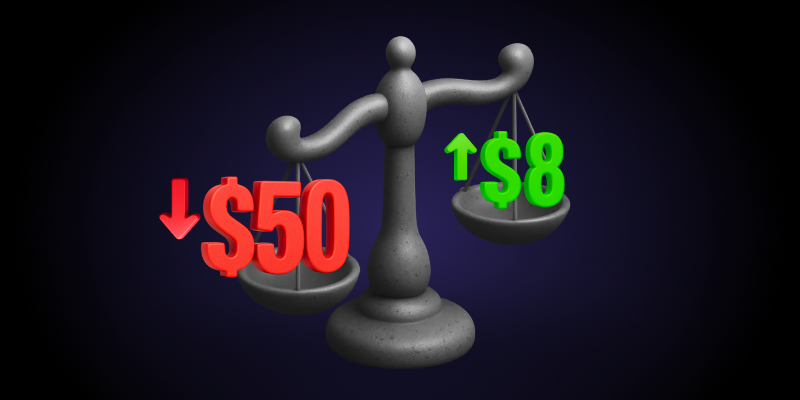
This is not a hypothetical. This is the actual unit economics that govern the industry.
Now ask yourself: If you are a venture-backed affiliate site with a burn rate and investor expectations, which strategy do you choose?
The Nash Equilibrium
This is not a collective action problem where everyone would be better off if everyone cooperated. This is a true Prisoner's Dilemma where defection is the dominant strategy.
Even if you want to be honest, you cannot afford to be. Here’s why:
- SEO disadvantage: If you publish No Codes, Google ranks you lower than competitors who publish 15 Active Codes (even if fake). You lose traffic.
- Cookie contamination: If a user visits your honest site first (no clicks) then visits a dishonest site (clicks for cookies), the dishonest site captures the commission even though you did the verification work.
- Capital efficiency: Investors allocate capital to the highest ROI. Lying generates 275% returns. Truth generates negative returns. Capital flows to fraud.
The system stabilizes at 100% fraud as the equilibrium state. No rational actor can unilaterally defect to truth without suffering immediate competitive death.
This is why every major coupon site, from the household names to the SEO spam farms, publishes predominantly fake codes. They are not bad at verification. They are economically incentivized to be bad.
II. The psychology of failure: Why broken promo codes hook you
Why do we keep clicking? Why do we try the seventh code when the first six failed?
It's not greed. It's not hope. It's fear.
The Failure Economy weaponizes a specific psychological vulnerability called Sugrophobia, the fear of being a sucker.
The reframing effect
When that empty promo box appears, your brain instantly runs a counterfactual simulation: "What if a code exists and I don't use it?"
This thought triggers a cascade:
- The current price is reframed from Fair Market Value to Sucker Price
- The act of checking out becomes reframed from Completing a Transaction to Accepting Defeat
- The search for a code becomes reframed from Optional Optimization to Mandatory Defense
You are no longer shopping for the product. You are shopping for fairness. You are shopping for dignity. You are shopping for proof that you are not the kind of person who pays full price when others do not.
Studies in behavioral economics show that humans will incur real costs (time, effort, cognitive load) to avoid even the perception of being taken advantage of. We will reject profitable deals if they feel unfair. We will walk away from Ultimatum Game offers that are mathematically beneficial but psychologically offensive.
The empty promo box is an Ultimatum Game. The merchant is offering you a deal: "Pay $X." Your brain screams: "But what if everyone else is paying $X - 20%?"
The Rich Patch Illusion
Competitors exploit this with the Rich Patch Illusion, a tactic borrowed directly from Information Foraging Theory.
Humans are evolved foragers. When searching for resources (food, information, opportunities), we use heuristics to predict the richness of a patch before fully investing time there. One primary heuristic is visual density.
A blueberry bush with visible clusters of berries signals a rich patch. A bush with no visible berries signals a poor patch. You move to the rich patch.
Coupon sites weaponize this instinct.
- A site that honestly says "No Codes Exist" signals a Poor Patch. Your brain predicts low probability of reward. You bounce.
- A site that lies and lists "23 Active Codes!" signals a Rich Patch. Your brain predicts high probability of reward. You stay.
The irony is that the honest site has done the hard work (verification) while the dishonest site has done nothing (generation). But your foraging instinct cannot distinguish between real density and fake density. The visual pattern triggers the same neural response.
You click the site with 23 codes because it looks like safety, even though it is a trap.
The Sunk Cost Spiral
Once you start clicking, you are caught in a second trap: the Sunk Cost Fallacy.
You click the first code. Invalid.
At this point, you have invested:
- Cognitive load: Breaking checkout flow, opening new tabs, context switching
- Time: 15-30 seconds
- Emotional energy: The anticipation and disappointment cycle
Your brain now asks: "Do I cut my losses or keep trying?"
Standard economic theory says cut losses. But humans are loss-averse. We hate wasting investments, even when those investments are already sunk.
You click the second code. Invalid.
Now you have invested double. The pain of quitting has increased. You are now 60 seconds in. Your brain rationalizes: "I've come this far."
You click the third code. Expired.
Fourth code. Excludes items in cart.
Fifth code. Invalid.
By the sixth code, you have invested 3-4 minutes and substantial emotional energy. You are now in what behavioral scientists call the Escalation of Commitment, the tendency to increase investment in a failing course of action to justify prior investments.
Meanwhile, every click has dropped a cookie. Every click has generated revenue for the site. You are not the customer. You are the product.
The Variable Ratio Schedule (Slot Machine Effect)
The experience of clicking through invalid codes precisely mirrors the Variable Ratio Schedule of reinforcement, the most addictive reward structure known to psychology and the same mechanic that powers slot machines and social media.
Here is how it works:
- Fixed Ratio: Every 10th action produces reward (boring, predictable)
- Variable Ratio: Reward appears unpredictably, but with discernible average frequency (maximally addictive)
When you click through codes, each failure is not processed as a stop signal. It is processed as a Near Miss, a term from gambling research.
The code exists (proof: the string is real). It just does not work for this cart, or this user, or this time. This validates that codes are real, creating the perception that success is possible, just not yet.
Each failure increases arousal (frustration + hope) rather than dampening it. This keeps you in the hunt, clicking, scrolling, trying, generating cookies, long past the point of rational utility.
Casinos engineer slot machines to produce frequent "near misses" (two cherries, one lemon) to maintain player engagement. Coupon sites engineer code lists to produce frequent "near misses" (code exists, but expired by 3 days) for the same reason.
You are not using a tool. You are pulling a lever.
III. The threat: The AI accelerant
If you think the current state of SEO spam is bad, you have not yet seen what is emerging.
We are entering the era of Recursive Pollution, and it will collapse the information commons.
The probabilistic relevance problem
Current AI agents (ChatGPT, Perplexity, Claude, Google SGE, Bing Copilot) are not truth engines. They are probabilistic relevance engines. They calculate:
$P(sounds_correct | linguistic_context)$
They do not calculate:
$P(is_valid | ground_truth_verification)$
To an LLM, a coupon code is not a cryptographic key that unlocks a discount. It is a token sequence that completes a linguistic pattern in the training data.
If the model has seen the string SAVE20 associated with the string Nike 10,000 times during training (even if every single instance was from fake SEO spam), the model learns that SAVE20 is a statistically probable completion when a user asks "What is a Nike promo code?"
The model is not lying. It is not hallucinating in the sense of random confabulation. It is making a statistically informed prediction based on the data it has seen. The problem is that the data it has seen is systematically poisoned.
The hallucination loop (model collapse)
This creates a catastrophic feedback cycle:
Generation 1 (Human spam): Humans create SEO spam to capture clicks and affiliate revenue. 10,000 sites publish the fake code NIKE50.
Generation 2 (AI training): AI models scrape the web during training. They ingest the 10,000 instances of NIKE50. The token sequence NIKE50 becomes weighted as a probable response to Nike-related queries.
Generation 3 (AI generation): Users ask AI: "What is a Nike promo code?" AI responds: NIKE50 (based on statistical frequency in training data, not verification).
Generation 4 (Recursive pollution): The AI-generated NIKE50 gets published to blogs, Reddit, Quora, forums. Future AI models scrape these AI-generated outputs during their training.
Generation 5 (Collapse): The ratio of fake-to-real codes in the training set increases exponentially. The "tails" of the distribution (nuanced truth, rare valid codes) get sheared off. The model converges toward the "mean" (the generic, ubiquitous fake code).
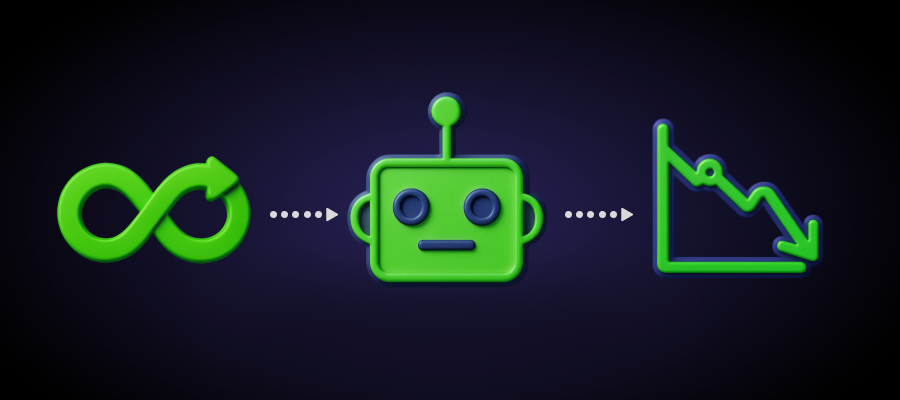
This is called Model Collapse in machine learning literature. When models are trained on synthetic data generated by previous models, the distribution degrades. Nuance is lost. Variance decreases. The output becomes a blurry average of averages, disconnected from ground truth.
The information commons is degrading into gibberish, and each generation of AI accelerates the decay.
The Friendly Fraud crisis
When AI agents try to execute transactions using this poisoned data, the result is Friendly Fraud, a term from payment processing that refers to chargebacks initiated by legitimate customers who feel deceived.
Here is the scenario:
- User asks AI shopping agent: "Find me the best price on Nike Air Max 270"
- AI searches the web, finds fake codes, calculates expected price: $140 (original $175 - 20% fake code)
- AI presents to user: "I found it for $140 at Nike.com"
- User approves purchase
- AI attempts checkout, code fails, actual price is $175
- User feels deceived, initiates chargeback or disputes the transaction
Merchants absorb the cost. Payment processors flag the account. Trust erodes.
AI agents are supposed to reduce friction in e-commerce. Instead, they are importing the Failure Economy's broken data directly into the transaction layer, creating a new category of systemic risk.
We are already seeing this in our logs. AI agents (identifiable by user-agent strings and request patterns) are hammering our verification API at increasing rates, desperate for deterministic data they can actually use at checkout. They are learning, in real time, that the web is unreliable.
The trust collapse scenario
Here is the trajectory if this continues unchecked:
Phase 1 (current): AI agents hallucinate codes, users experience failures, trust in AI shopping assistants decreases by 10-15% per quarter.
Phase 2 (6-12 months): Merchants, facing rising fraud rates, begin blocking AI agents or implementing CAPTCHA on checkout. AI shopping becomes adversarial.
Phase 3 (12-24 months): The "hallucination tax" on e-commerce (wasted time + chargebacks + customer service costs) exceeds $10B annually. Regulatory scrutiny increases.
Phase 4 (24-36 months): Either (a) verification infrastructure becomes mandatory for AI agents (Truth Layer as a regulatory requirement), or (b) AI shopping collapses as a category and users revert to manual shopping.
This is not speculative. This is the natural progression of a system where lies are cheaper than truth and AI accelerates the production of lies.
IV. The solution: How verified promo codes should actually work
Truth cannot be scraped. Truth cannot be inferred. Truth cannot be hallucinated.
Truth must be manufactured.
SimplyCodes is not a coupon site. We are a Probabilistic Truth Refinery, and we had to invent entirely new economics to make truth viable.
The central insight: Truth as a product
The breakthrough realization was this: In a world of infinite fake options, the most valuable commodity is a verified "No."
When every site claims "23 Active Codes," the user is drowning in false positives. They do not need more codes. They need Cognitive Closure. They need the Stop Condition. They need permission to check out without that gnawing feeling that they are being played.
We sell certainty.
When SimplyCodes tells you "No codes exist for this cart," we are not failing. We are succeeding. We are resolving the Zeigarnik Loop that the empty promo box created. We are giving you back your cognitive bandwidth. We are letting you return to Acquisition Mode.
This is the product. Not the discount. The closure.
The Glass Box Protocol: Byzantine Fault Tolerance
To manufacture truth at scale, we had to solve a problem that computer scientists call Byzantine Fault Tolerance (BFT).
In distributed computing, BFT describes a system that continues to operate correctly even when some of its components (nodes, data sources, actors) fail or act maliciously. The challenge is: How do you reach consensus on truth when you cannot trust any individual source?
Our system processes 55 million verifications per month through a three-layer architecture:
Layer 1: Blindness (de-biasing)
Our human validators operate in a double-blind environment. When a validator tests a code, they do not know:
- Where the code came from (scraped site, user submission, merchant email)
- What other validators have said about it
- What the code's current status is in our database
This prevents confirmation bias. If a validator knew a code was "trending" or "previously verified," they might unconsciously let invalid codes pass or fail valid codes they expect to fail.
Layer 2: Staking (incentive alignment)
Every validator has a Reputation Score, a numerical asset that functions as collateral. When they verify a code, they are staking their reputation on the outcome.
If their verification agrees with consensus, their reputation increases (reputation++). If their verification conflicts with consensus and is later proven wrong, their reputation decreases (reputation--).
Low reputation validators lose:
- Access to higher-paying verification tasks
- Visibility in the network
- Eligibility for bonus pools
This aligns economic incentives with accuracy. Unlike the affiliate model where lying is profitable, in our model, accuracy is profitable. We have engineered a Nash Equilibrium of Honesty.
Layer 3: Consensus (Multi-Node Agreement)
No code achieves "Verified" status until multiple independent nodes agree:
- Human Validators: 3-7 humans test the code in isolation
- Automated Agents: Bots with residential proxies test the code in synthetic carts
- Merchant API: When available, we query the merchant's validation endpoint directly
- User Feedback: After publication, users vote on actual checkout outcomes
A code must pass all available layers to be marked "Verified." A code that fails any layer is marked "Invalid" with specific reason code (expired, excluded, fake syntax, etc.).
This is overkill by design. We are not trying to be 90% accurate. We are trying to be 99.7% accurate, which is the threshold where users begin to trust the system more than they trust their own manual search.
The Economic Model: How Truth Becomes Viable
The reason no one else does this is cost. Verification is expensive. So how do we make it work?
Revenue Model 1: Affiliate commissions (Verified Codes Only)
We still participate in affiliate networks, but with a crucial constraint: We only earn commission when:
- We provided a verified code that actually worked, OR
- We verified that no codes exist and the user checked out anyway (closure value)
This means our revenue is directly tied to accuracy. Competitors earn revenue from clicks. We earn revenue from truth.
Revenue Model 2: API licensing (The Determinism Layer)
AI agents, checkout optimizers, shopping assistants, and browser extensions pay to access our verification API because we are the only source of deterministic, stateful truth in the coupon ecosystem.
When an AI agent asks "Does a code exist for Nike Air Max 270 in a cart of $175?" we return:
- Binary answer (Yes/No)
- If Yes: The code, exclusions, expiration, success rate
- If No: When we last verified this (timestamp), how many codes we tested (audit trail)
This is Truth as Infrastructure. We are not selling codes. We are selling certainty.
Revenue Model 3: Merchant partnerships (Quality Signal)
Merchants pay us to verify and promote their legitimate codes because our SimplyCodes Verified badge has become a quality signal.
A code marked SimplyCodes Verified converts higher than an unverified code because users have learned to trust our process. Merchants want their real codes surfaced through our network because it drives higher-quality traffic (users who complete checkout vs users who bounce after failed codes).
The failure log: Showing the work
Here is what separates us from competitors: We show you what did not work.
When you search "Nike Promo Code" on SimplyCodes and we say "No codes found," we also show:
- 47 codes we tested in the last 24 hours (and why each failed)
- Exclusions we detected (e.g., "Code SAVE20 exists but excludes Air Max")
- When we last checked (timestamp)
- When we will check again (next verification cycle)
This is what we call The Glass Box. We are not asking you to trust us blindly. We are showing you the machinery. We are proving we did the work.
Competitors show you 23 Active codes and hide the fact they tested zero.
We show you zero active codes and prove we tested 47.
This is the inversion. This is how you break the Nash Equilibrium. You do not compete on volume of fake codes. You compete on transparency of real work.
The Network Effect: Community Validation
As our user base grows, we gain a secondary verification layer: Crowd Truth.
When a user tries a code we marked Verified and it fails, they report it. When enough reports accumulate, we instantly mark the code "Under Review" and trigger re-verification.
When a user discovers a working code we missed, they submit it. It enters our verification pipeline. If it passes BFT, we add it and credit the user's reputation score.
This creates a Truth Network where accuracy improves with scale, unlike spam networks where quality degrades with scale.
Every user becomes a validator. Every checkout becomes a data point. The system becomes anti-fragile: it gets stronger with exposure to failure.
The vision: The Determinism Layer for commerce
Our long-term vision is to become the Determinism Layer for all of e-commerce.
In a world where:
- AI agents hallucinate prices
- Dynamic pricing changes mid-checkout
- Surge pricing operates invisibly
- Dark patterns manipulate users
- Fake reviews mislead buyers
- Bait-and-switch tactics are automated
Someone needs to be the source of verifiable, deterministic truth.
That is SimplyCodes.
We are building the infrastructure where:
- Every price can be verified against historical data
- Every code can be tested before checkout
- Every promotion can be validated in real-time
- Every merchant claim can be fact-checked
We aren’t trying to be the biggest coupon site. We are trying to be the Truth Layer that makes commerce trustable in an age of algorithmic deception.

Dakota Nunley
Head of Search Product
Dakota Nunley is Head of Search Product at Product.ai, the company behind SimplyCodes, where he owns how both brands show up in Google and in AI answers. He runs SEO and answer engine optimization (AEO), the SimplyCodes merchant pages, and the digital PR and original research program that gets both brands cited by journalists and AI engines.
Prior to joining Product.ai, he was a Content Strategy Manager at Udacity and a Senior Copy & Content Manager at Greatness Media, where he helped launch greatness.com from scratch as the editorial lead. A skilled writer and content leader, he co-founded the content marketing agency Copy Buffs and has been a columnist for Inc. Magazine, publishing over 170 articles. He has also ghostwritten for publications like Forbes Magazine and was invited to speak on the podcast Social Media Examiner. During his time at Udacity, he was a key author of thought leadership content on AI, machine learning, and other technologies. His work at Scratch Financial included leading the company's rebrand and securing press coverage in publications like TechCrunch and Business Insider. He also worked as a Marketing Copywriter at ExakTime.
He holds a Bachelor's degree in History from the University of California, Berkeley.
Stay in the loop
Get our latest research.
Promo code studies, seasonal shopping guides, industry savings reports. No spam — unsubscribe any time.