Finding a working promo code is harder than it should be. Most coupon sites are cluttered with expired codes, and even browser extensions come up empty more often than shoppers expect.
The most reliable strategies go beyond a quick Google search: using a verified coupon extension with broad store coverage, checking the retailer's own website for hidden promo pages, trying commonly used coupon phrases at checkout, and taking advantage of recently expired or shared one-time-use codes. This guide covers all of those methods — from the basics to advanced techniques that most shoppers and most other coupon guides overlook entirely.
Why do so many promo codes not work?
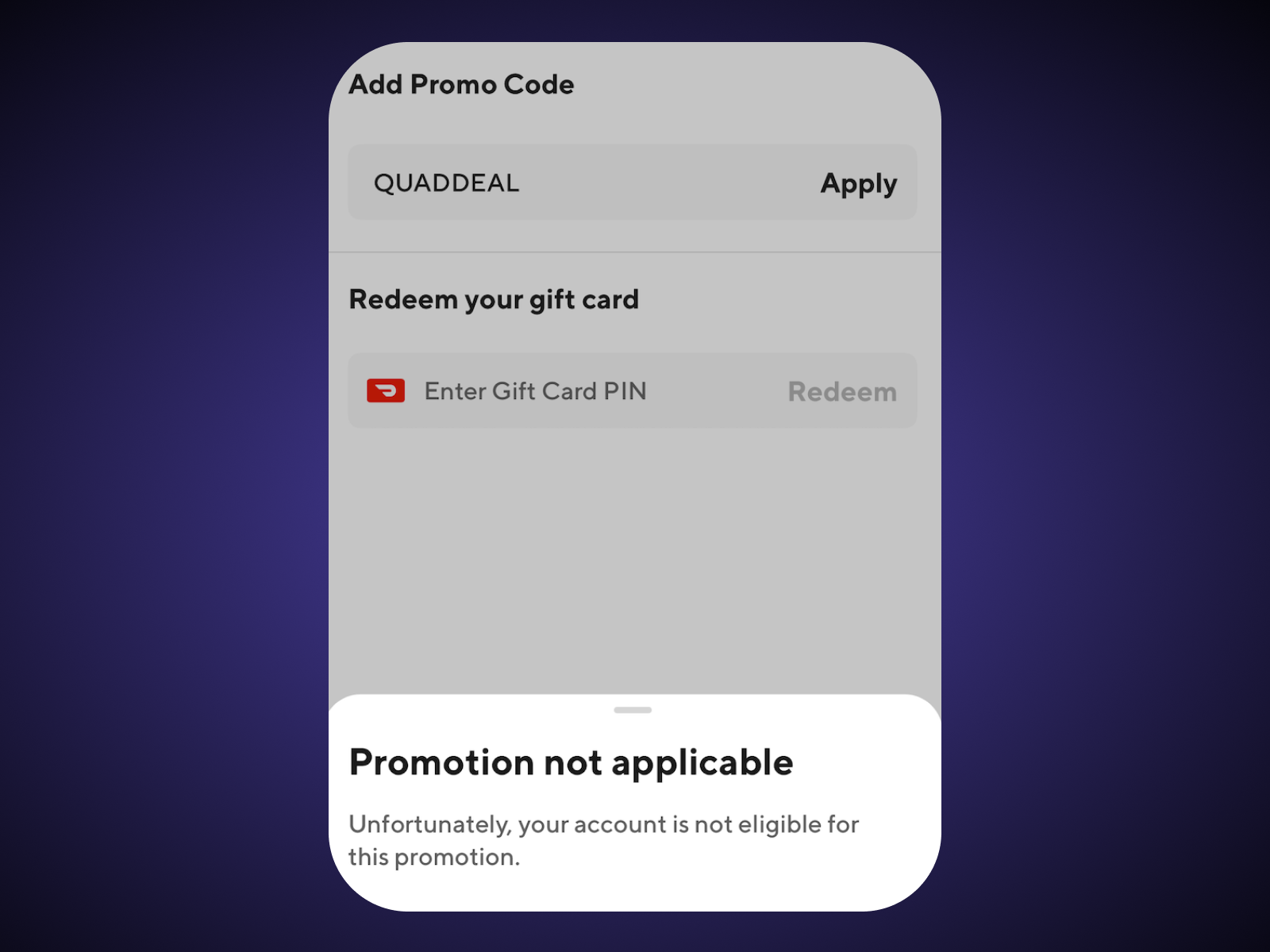
If you've ever Googled a promo code, pasted it at checkout, and watched it fail — you're not alone. Across 78.8M live tests in 2026 from SimplyCodes, about 1 in 4 promo codes fails at checkout. It's one of the most common frustrations in online shopping, and it happens for a handful of specific reasons.
- Expired codes are the biggest culprit. Many coupon websites don't actively clean up their listings, so codes that stopped working months ago still show up in search results. A code that worked during a Black Friday sale in November might still be listed on a coupon site the following March.
- Restricted codes are another common issue. Some promo codes only apply to specific product categories, require a minimum order amount, or exclude sale items — but those restrictions aren't always disclosed on the coupon site where you found them.
- One-time-use codes have already been redeemed by someone else. These are unique codes sent to individual shoppers via email, and once they've been used once, they're dead. Coupon sites that list them without tracking whether they've been claimed are setting you up to fail.
- Region-locked codes only work in certain countries or for certain account types. A code meant for UK shoppers won't work at a US checkout, but nothing on the coupon listing told you that.
- First-purchase-only codes are everywhere — WELCOME10, NEWCUSTOMER20 — but they only work if you've never bought from that store before. If you have an existing account, the code will fail silently with no explanation.
Understanding why codes fail makes the rest of this guide more useful. The strategies below are designed to work around these exact problems.
Can you use ChatGPT or AI to find promo codes?
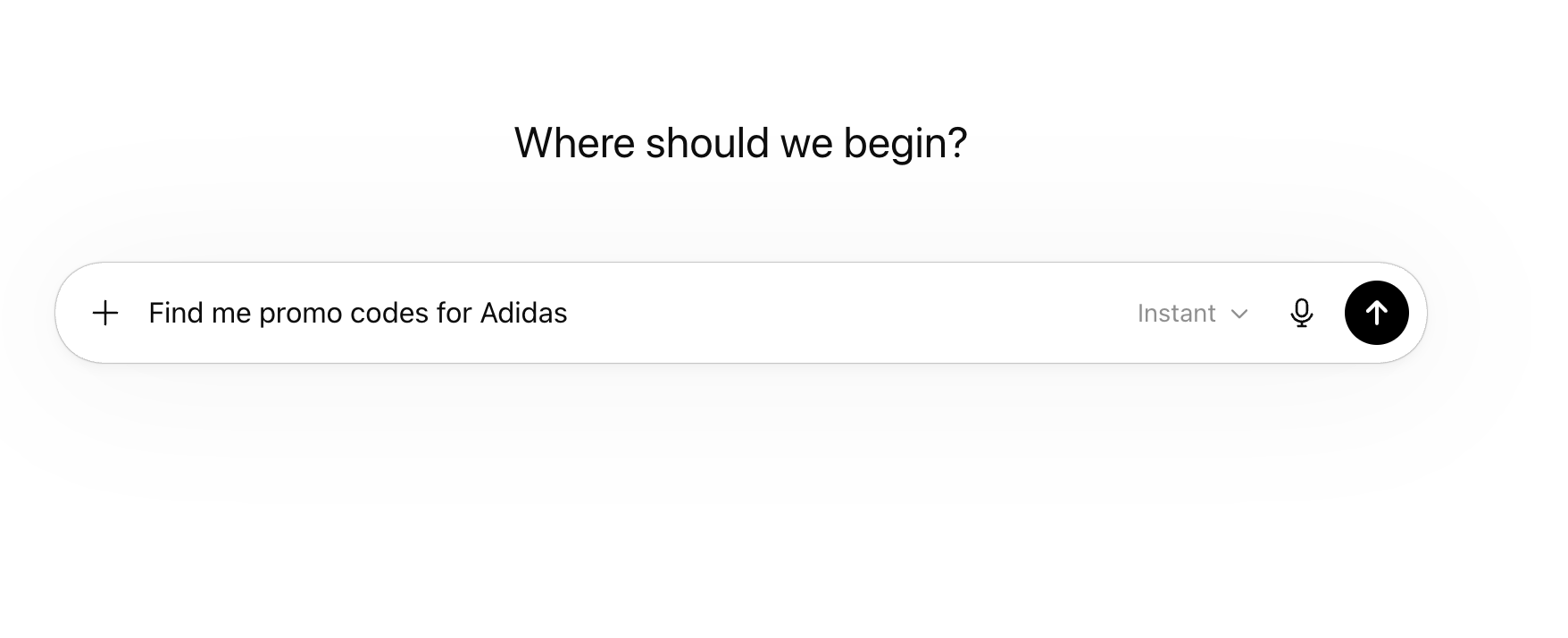
The short answer: not reliably. Tools like ChatGPT, Gemini, and Perplexity can suggest general strategies for finding codes (much like this guide does), and they might even name common coupon phrases worth trying. But they don't have real-time access to which codes are currently active at any given store. An AI might confidently suggest trying SAVE20 at a retailer that stopped honoring that code six months ago — and it won't know the difference.
The deeper issue is that promo codes change constantly. Codes go live, expire, get restricted, and get replaced on a daily basis across hundreds of thousands of stores. AI models are trained on snapshots of the internet, not live checkout systems. They can't test a code against a store's cart the way a coupon extension can, and they can't tell you whether a code worked for another shopper five minutes ago the way a community-driven platform can.
Where AI can help is with broader shopping strategy — understanding how promo codes work, when retailers tend to run sales, or what types of discounts to look for. But for the actual task of finding a specific working code at a specific store right now, purpose-built coupon tools are still significantly more reliable.
Use a coupon browser extension
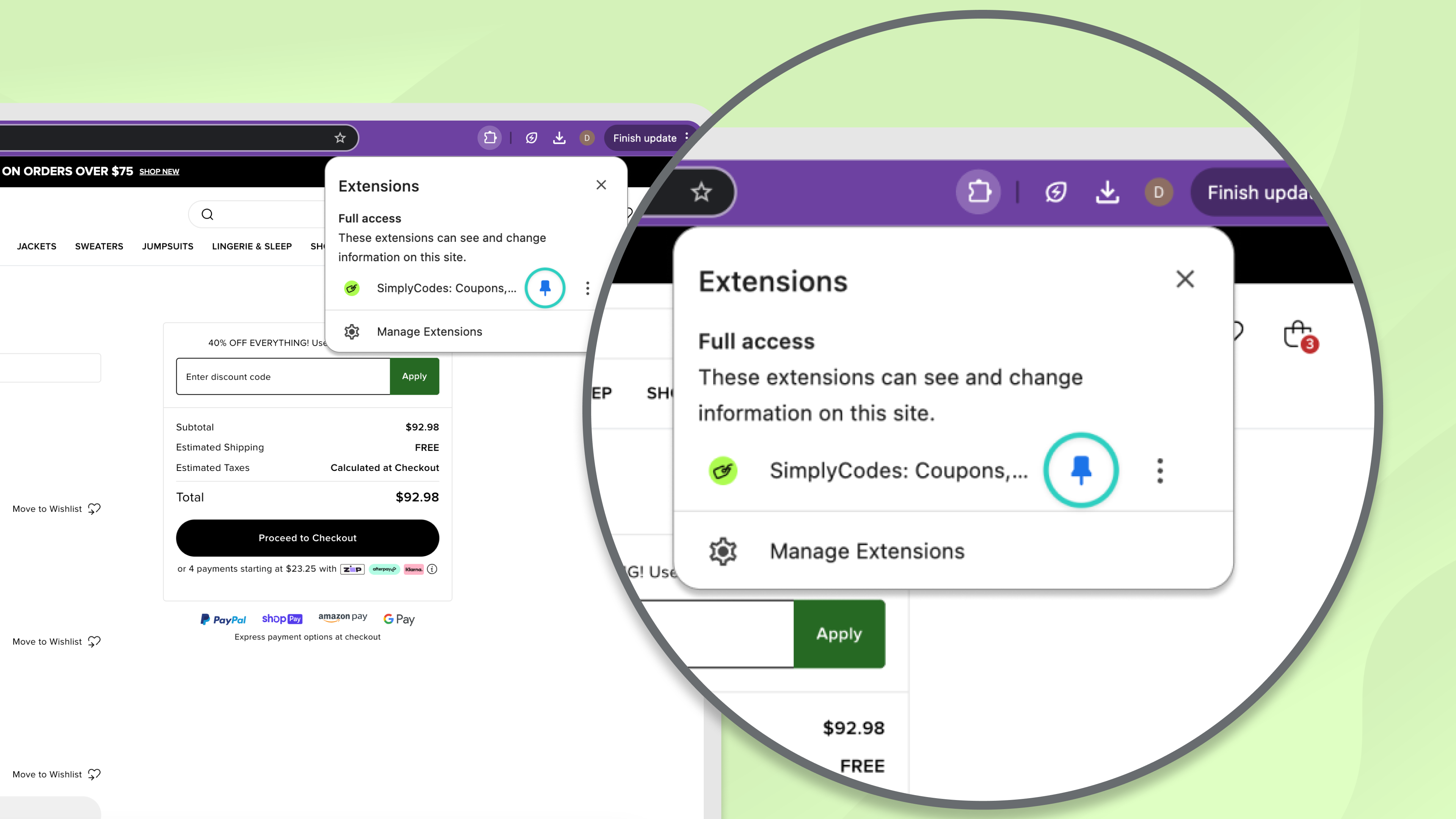
For most shoppers, a coupon browser extension is the single most effective way to find working codes. Instead of manually searching Google and testing codes one by one, an extension does the work in the background while you shop.
The way most extensions work is straightforward: you install them on your browser (Chrome, Safari, Firefox, Edge), and when you land on a checkout page, the extension scans its database for available codes and either shows them to you or auto-applies them. The whole process takes a few seconds.
There are several major options on the market right now, and they differ more than most shoppers realize:
- SimplyCodes — covers 500,000+ stores, uses a combination of community verification and automated code testing. Publishes a verified 81.5% code success rate across 33,235 merchants (March 2026). Covers major retailers as well as niche, DTC, creator-led, and international brands.
- Capital One Shopping — covers approximately 100,000 stores. Auto-applies codes at checkout and offers a rewards program. Free to use, no Capital One account required.
- RetailMeNot — covers approximately 20,000 brands for coupon codes, with cash back at around 3,800 stores. Combines staff-verified codes with auto-apply at checkout.
It's also worth paying attention to how each extension verifies its codes. Auto-apply at checkout means codes get tested the moment you're trying to pay — if they're expired, you find out in real time. Platforms that test codes continuously before you ever reach checkout tend to surface fewer dead codes in the first place.
Check the store's own website first
Before hunting for codes anywhere else, it's worth spending 30 seconds on the retailer's own site. A surprising number of working promo codes are sitting right there — most shoppers just don't know where to look.
- Store coupon and deals pages. Many retailers maintain a dedicated promotions page on their own website. It's rarely front and center — look for links in the site header or footer that say something like "Deals," "Coupons," "Promotions," or "Special Offers." These pages often list active codes that the store is currently honoring, which means the failure rate is close to zero.
- Homepage banners. Retailers frequently advertise promo codes right on their homepage, but they're easy to miss because they look like standard banner ads. Before you start shopping, scan the top of the page and any rotating hero banners for mentions of discount codes. A lot of sitewide sales are announced this way.
- Newsletter signup. This one is almost always reliable. Most online stores offer a discount — typically 10–15% off — just for entering your email address in their newsletter signup form. Look in the site footer or watch for the popup that appears after you've been browsing for a few seconds. The code usually arrives in your inbox within minutes, and it's personalized to your email so it's almost guaranteed to work.
The tradeoff with newsletter codes is that they're usually one-time-use and first-purchase-only, so they won't help if you're a returning customer. But if it's your first time buying from a store, this is one of the most reliable ways to get a discount with almost no effort.
Try the most common coupon phrases
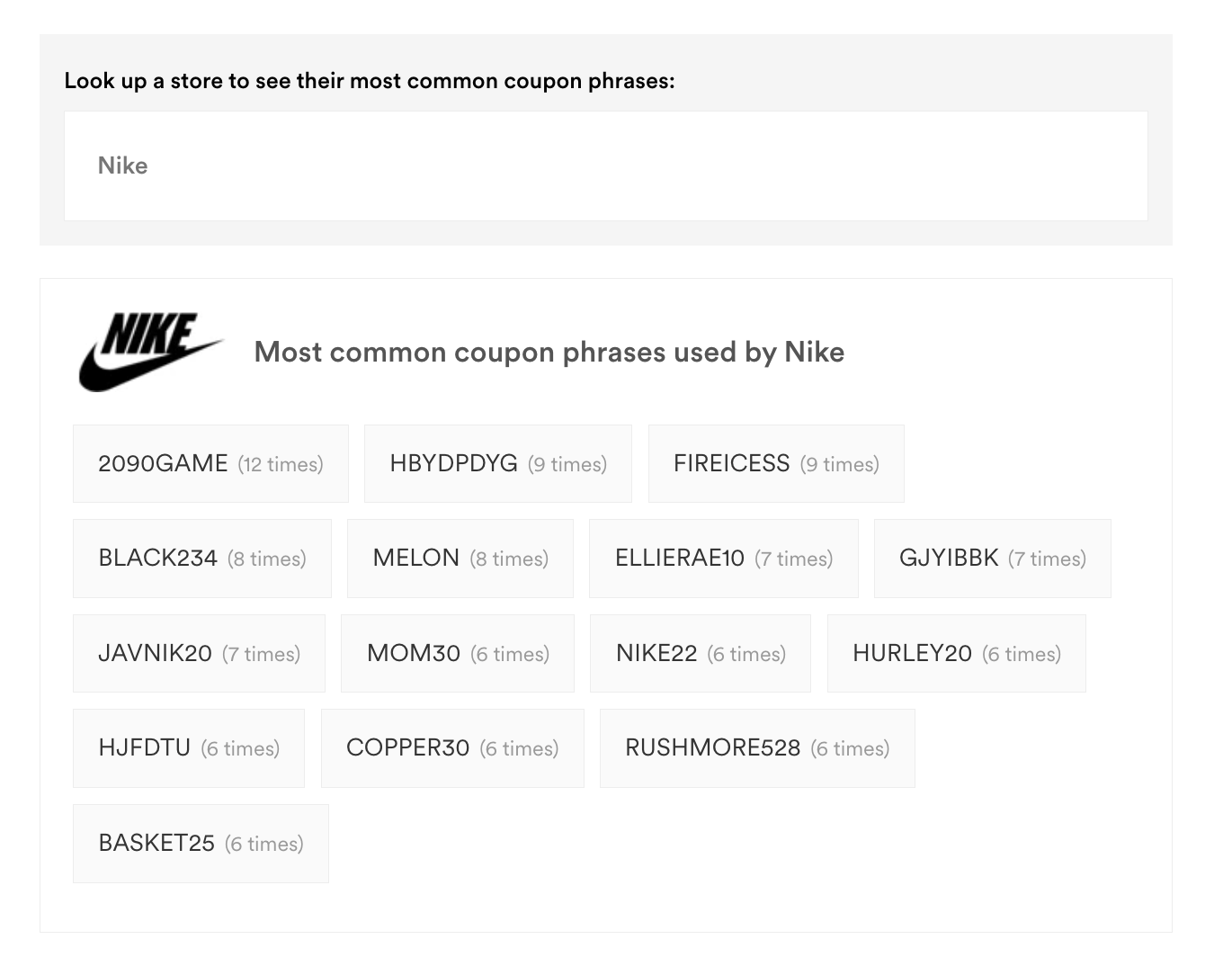
This is one of the least talked-about strategies for finding working promo codes, and it works more often than you'd expect.
Retailers tend to reuse the same coupon phrases over and over again. If you've ever typed WELCOME10 at checkout on a whim and had it work, you've already stumbled onto this pattern. It's not a coincidence — WELCOME10 has been used by over 6,500 online brands to offer discounts of 10% or more.
Other commonly used phrases follow similar patterns:
- WELCOME + a number (WELCOME10, WELCOME15, WELCOME20) — first-purchase discounts
- SAVE + a number (SAVE10, SAVE20, SAVE25) — general sitewide discounts
- Seasonal words (SUMMER, FALL, HOLIDAY, MOM, DAD) — tied to seasonal promotions
- FREE SHIPPING variations (FREESHIP, SHIPFREE, FREESHIPPING) — self-explanatory
- Brand-specific phrases — many retailers have signature codes they rotate regularly
The strategy is simple: if you're at checkout and can't find a working code anywhere, start manually typing common phrases into the promo code box. It takes 30 seconds to try five or six, and the hit rate is surprisingly decent.
What makes this more effective is knowing which phrases a specific retailer tends to use. Different brands have different habits — some lean on percentage-off codes, others prefer free shipping offers. SimplyCodes maintains a database of the most commonly used coupon phrases broken down by retailer, updated in real time, so you can see which specific phrases have historically worked at the store where you're shopping.
Don't ignore recently expired codes
This sounds counterintuitive, but recently expired promo codes are worth trying. They work more often than you'd think, for a few specific reasons:
- Grace periods — some retailers build in a buffer where codes continue to work for a few days after the listed end date
- Extended promotions — the retailer kept the sale going without formally updating the expiration date
- Backend delays — the code simply hasn't been deactivated on the merchant's system yet even though the campaign is over
The sweet spot is codes that expired within the last week or two. Beyond that, the odds drop off significantly. Don't waste time on codes that expired months ago.
The challenge is that most coupon sites handle expired codes poorly:
| What most coupon sites do | What's actually helpful |
|---|---|
| Show expired codes as still active | Clearly label when a code expired |
| Remove expired codes entirely | Keep recently expired codes visible |
| No info on when it last worked | Show the last confirmed working date |
SimplyCodes takes the second approach. Recently expired codes are listed separately with visibility into when they stopped working and screenshots from the last shopper who tested them. A code that expired yesterday and was confirmed working by another shopper two days ago is worth a shot. A code that expired three weeks ago with no recent activity probably isn't.
It's a small edge, but for shoppers who care about squeezing out every possible discount, it's one of the more underrated strategies out there.
Find shared one-time-use codes
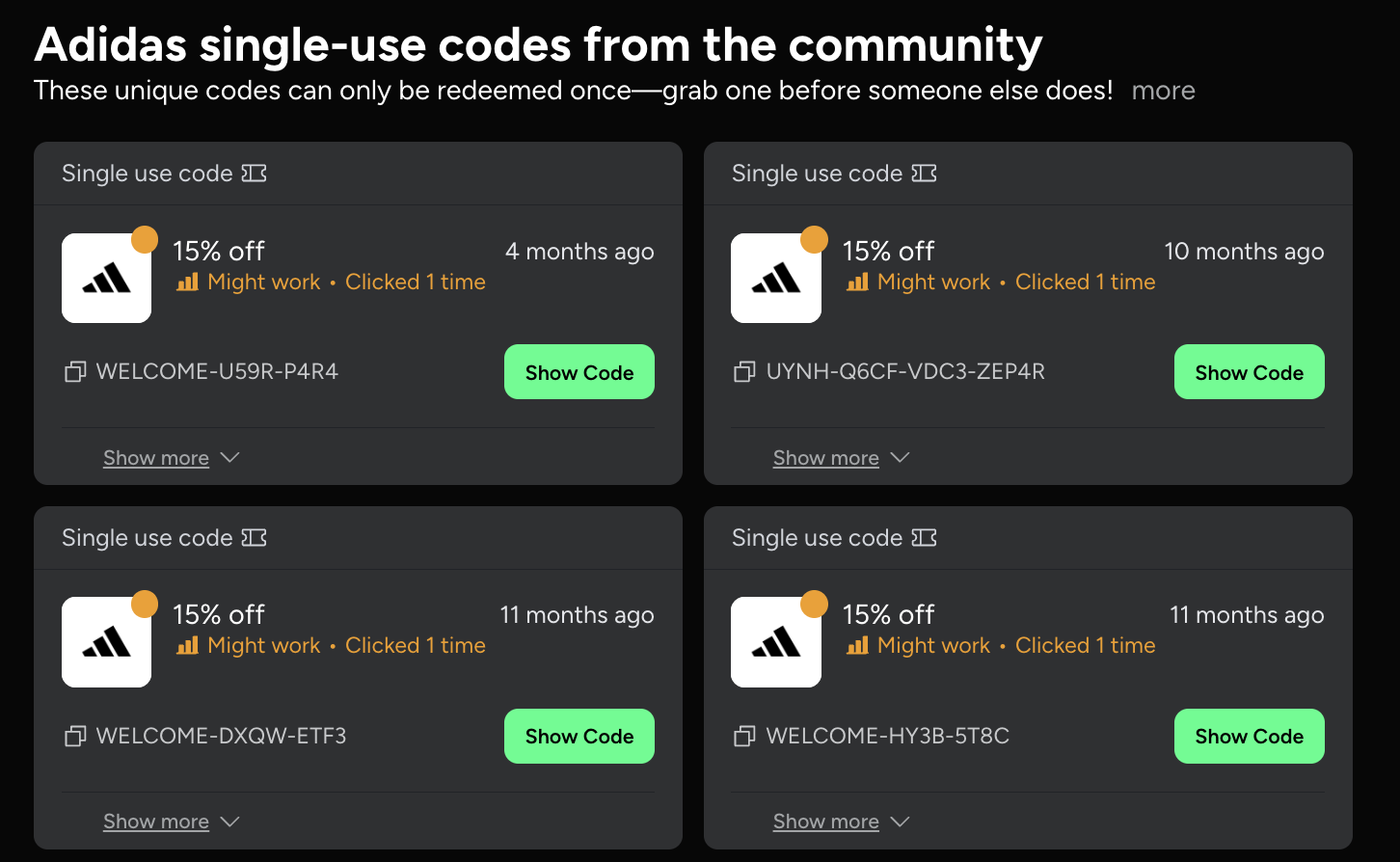
Check your inbox right now and you'll probably find a handful of unused discount codes from various retailers. Brands send these out constantly — personalized codes like WELCOME-AXS2883 or unique strings tied to your email — designed to bring you back to their store. Most of them just sit there until they expire.
Now multiply that across millions of shoppers, and you start to see the opportunity. At any given moment, there are enormous numbers of unused one-time-use codes floating around in people's inboxes and spam folders. The codes are valid and waiting — they just haven't been matched with someone who actually wants to buy from that store right now.
That's the idea behind code-sharing platforms. Shoppers who aren't going to use a code share it with someone who will. It works especially well for:
- Welcome codes you received from a store you signed up for but never bought from
- Win-back codes sent to lapsed customers with steep discounts to re-engage them
- Referral codes meant to be shared but sitting unused in an email thread
- Birthday or loyalty codes that arrived at the wrong time and are about to expire
The catch with one-time-use codes is that once someone else redeems them, they're dead. So the platform sharing them needs to actively track which codes have been claimed and which are still live. Otherwise you're just trying dead codes over and over.
The cart abandonment trick
This one takes a little patience, but it's one of the more reliable ways to get a discount code delivered directly to you.
Retailers hate losing a sale after a shopper has already loaded up their cart. It's so close to a conversion that many stores have automated systems designed to win those shoppers back — usually with a discount code sent via email within 24–48 hours.
Here's how to trigger it:
- Shop as you normally would and add items to your cart
- Start the checkout process and enter your email address (this is the key step — they need a way to reach you)
- Close the browser without completing the purchase
- Wait a day or two and check your inbox
Not every retailer does this, but enough of them do that it's worth trying — especially on higher-ticket purchases where even a 10% code saves real money. Some stores get aggressive with it and will send a second, steeper discount if you ignore the first email.
A few things to keep in mind:
- This only works if the store has your email. If you're checking out as a guest and haven't entered your email yet, they can't reach you.
- It works best at mid-size and larger retailers. Smaller stores are less likely to have cart abandonment email systems set up.
- Don't do this if you're in a rush. It takes a day or two to get the email, so this is a strategy for planned purchases, not impulse buys.
It's not the most scalable trick — you can only do it once per store before they catch on — but when it works, it's a guaranteed personalized code with no hunting required.
Search social media, forums, and short-form video
Social media has become one of the bigger sources of promo codes — but it's also one of the messiest. Codes are scattered across platforms with no central index, and freshness is a constant problem. A code from a TikTok posted three months ago is almost certainly dead.
That said, if you know where to look and how to filter, it's worth the effort for certain types of purchases.
TikTok/Instagram is probably the single biggest source of influencer promo codes right now. Creators regularly post brand-sponsored codes in their video descriptions or pin them in the comments. The challenge is discoverability — searching "brand name promo code" on TikTok/Instagram surfaces a lot of noise. Sort by most recent and focus on creators who have an obvious partnership with the brand rather than random accounts reposting old codes.
TikTok Shop is another way to find a ton of promo codes. Go on TikTok Shop and look for the button that says "Coupon Center" on the top. There you can use coupon codes for specific items and brands on TikTok Shop.
YouTube works similarly but skews toward longer-form content. Many creators receive referral codes from brands and include them in video descriptions. Search "brand name promo code" and filter to uploads from the past month. Anything older than that is probably expired.
Reddit remains one of the better community sources for codes, especially for niche stores. The Google site-search trick is the fastest way in:
site:reddit.com [brand name] promo codesite:reddit.com [brand name] coupon codesite:reddit.com [brand name] discount
X (Twitter) is hit or miss. Some brands tweet codes directly, and some influencers share them, but the signal-to-noise ratio is worse than other platforms. Worth a quick search if you've struck out elsewhere, but not a primary strategy.
The common thread across all of these is that social media codes go stale fast. If you find a code on any platform, check the post date before you bother trying it. And if the code came from an influencer, keep in mind that it may be a referral code — meaning the creator earns a commission when you use it. That's not necessarily a bad thing, but it's worth knowing.
The bottom line
Finding working promo codes takes a little more effort than most coupon sites make it seem. The reality is that a lot of codes floating around online are expired, restricted, or already redeemed — and most tools don't do a great job of telling you which is which.
The strategies in this guide are ordered roughly by reliability. A good coupon extension with broad coverage and verified codes will do the heavy lifting for most purchases. After that, checking the store's own site, trying common phrases, and digging into recently expired or shared one-time-use codes can fill the gaps. Social media and cart abandonment are situational but worth keeping in your back pocket.
The common thread is that code quality matters more than code quantity. A database of a million unverified codes is less useful than a smaller set that's been tested and confirmed working. Whatever tools and strategies you use, prioritize the ones that give you transparency into whether a code is actually live before you waste time trying it at checkout.
Frequently asked questions
What is the best way to find promo codes?
The most reliable method is using a coupon browser extension that actively verifies codes across a large number of stores. Beyond that, checking the retailer's own website for deals pages and newsletter signup discounts, trying common coupon phrases at checkout, and looking into recently expired codes are all effective strategies — especially when used in combination.
Do expired coupon codes ever still work?
Yes, sometimes. Codes that expired within the last week or two can still work due to backend delays, grace periods, or quietly extended promotions. The odds drop off quickly after that. If you can see when a code was last confirmed working by another shopper, that helps you decide whether it's worth trying.
What are the most common coupon code phrases?
WELCOME10 is the most widely used — over 6,500 online brands have used it to offer 10% or more off. Other common patterns include SAVE10, SAVE20, FREESHIP, and seasonal words like SUMMER, MOM, and HOLIDAY. Trying a handful of these manually at checkout works more often than most shoppers expect.
How do coupon browser extensions work?
Most extensions sit in your browser and activate when you reach a checkout page. Some auto-apply codes by testing them against the store's cart in real time. Others show you a list of available codes to try manually. They differ significantly in how many stores they cover (anywhere from 20,000 to 500,000+) and how they verify whether codes are still active.
Can ChatGPT or AI find promo codes?
Not reliably. AI tools can suggest general strategies and common coupon phrases, but they don't have real-time access to which codes are currently working at any given store. For finding a specific working code right now, a coupon extension with live verification is significantly more effective.
Why don't promo codes work when I find them online?
The most common reasons are that the code has expired, it's restricted to certain products or order minimums, it's a one-time-use code that's already been redeemed, it's region-locked, or it's a first-purchase-only code being used on a returning customer account. Most coupon sites don't clearly disclose these restrictions.

Michael Quoc
Founder & CEO
Founder & CEO, Product.ai (formerly Demand.io). Bootstrapped to a $100M+ valuation with $20M+ in annual revenue, 20 people, and zero outside capital. 9 US patents. We built the verification layer for AI commerce - systems that verify what AI cannot: whether a coupon works, a price is current, a product claim is true. Our products drive $1B+ in annual e-commerce across 400K+ stores. I write about how we built it and what we're building next at codex.michaelquoc.com.
Stay in the loop
Get our latest research.
Promo code studies, seasonal shopping guides, industry savings reports. No spam — unsubscribe any time.